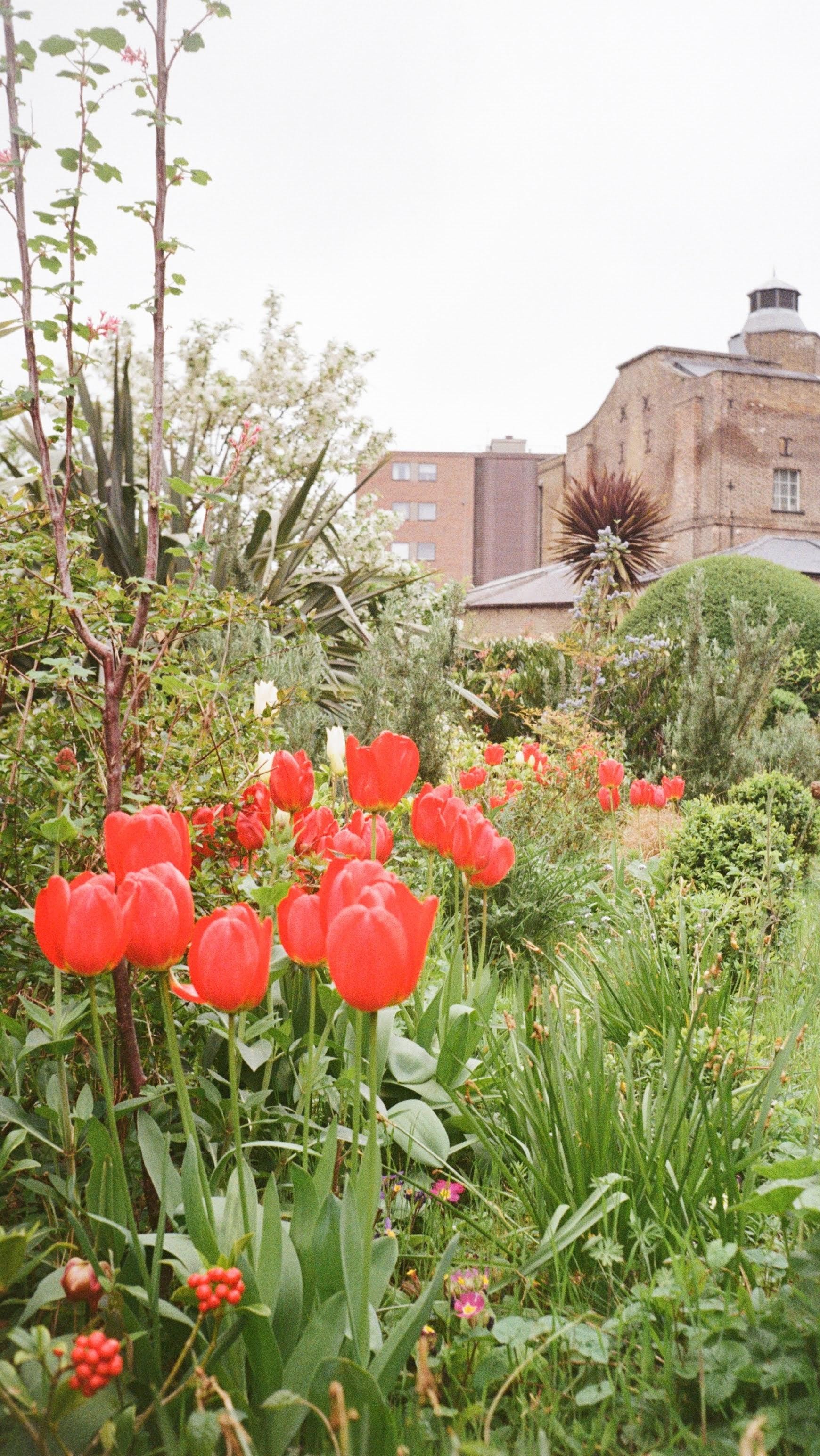
water, plants, wildlife
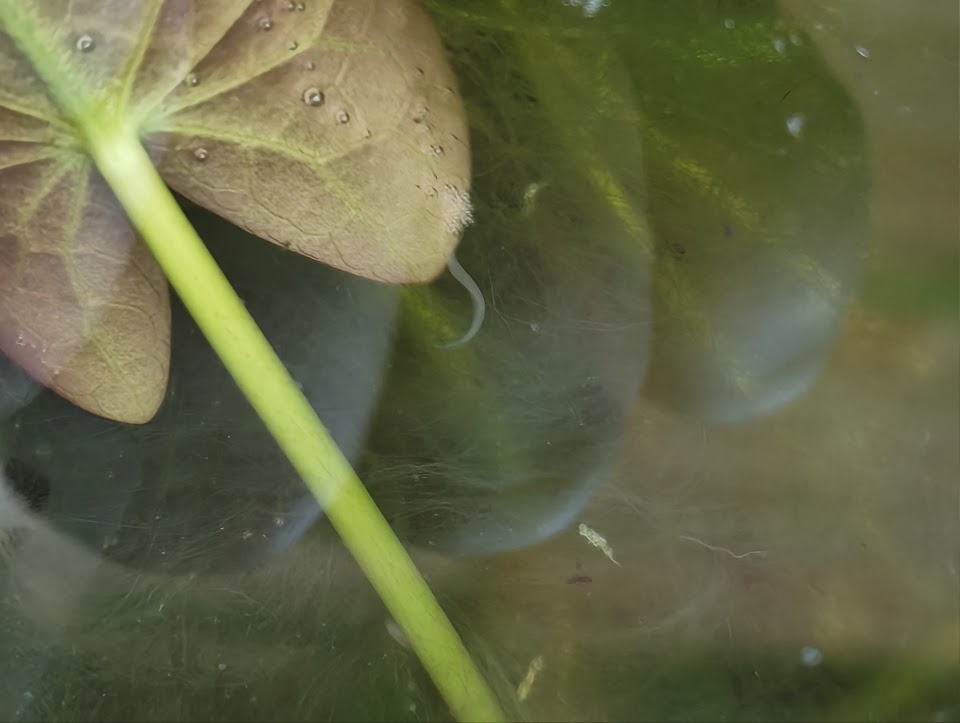
I got worms
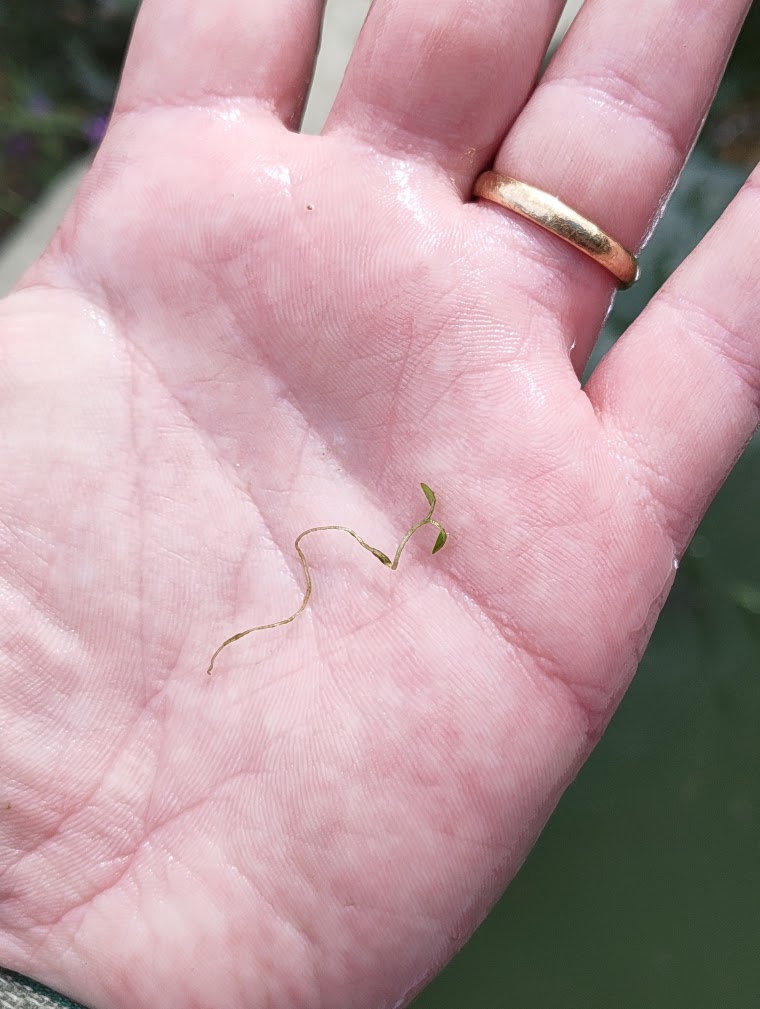
I got worms. Pond worms. Some sort of detritus oligochaete to be precise, a good sign of bioactivity and pond health. I spotted this one on my balcony pond but I have other wildlife flourishing in the fountain pond now too.
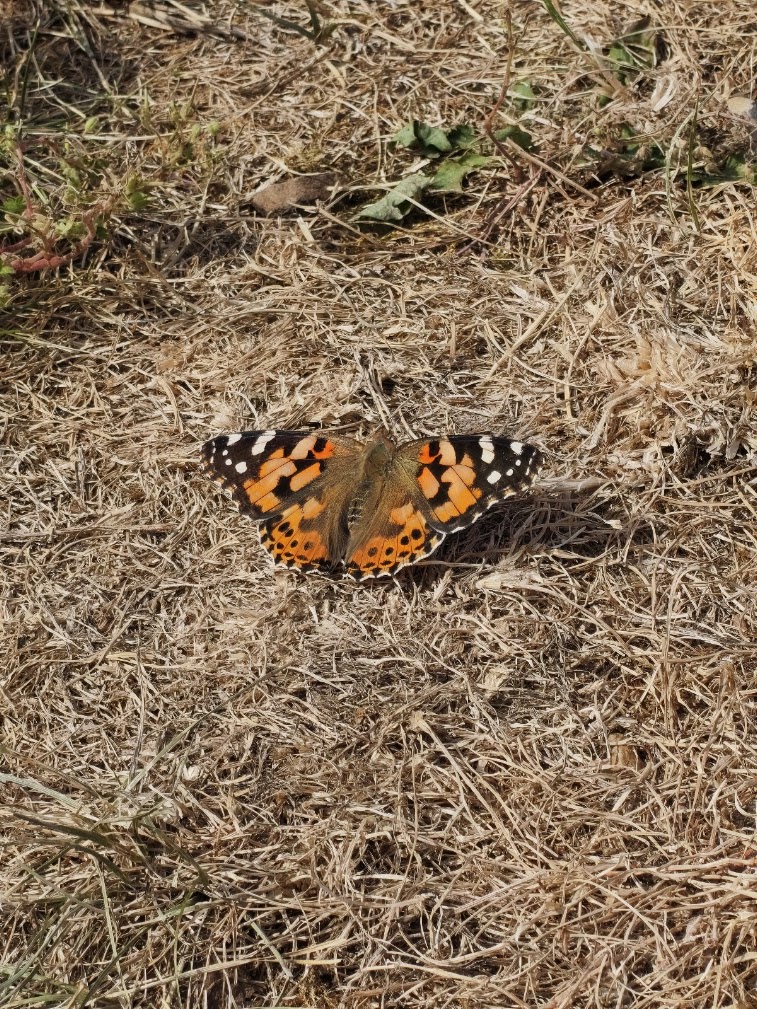
This Painted Lady butterfly (Vanessa cardui) was a nice spot next to the fountain, not too uncommon in the UK during the summer months when it migrates from Northern Africa and Southern Europe. It beggars belief that this delicate creature makes such an odyssey; apparently they do so by ascending up to 1000 m to catch high-speed atmospheric tailwinds, surfing along at 45 km/h. To be completely clear, I’ve also just read that this migration takes place over approximately 6 successive generations, so the Painted Ladies that return to Africa in the autumn are several times removed from their ancestors who left earlier in the year. Ulysses had it easy by comparison.
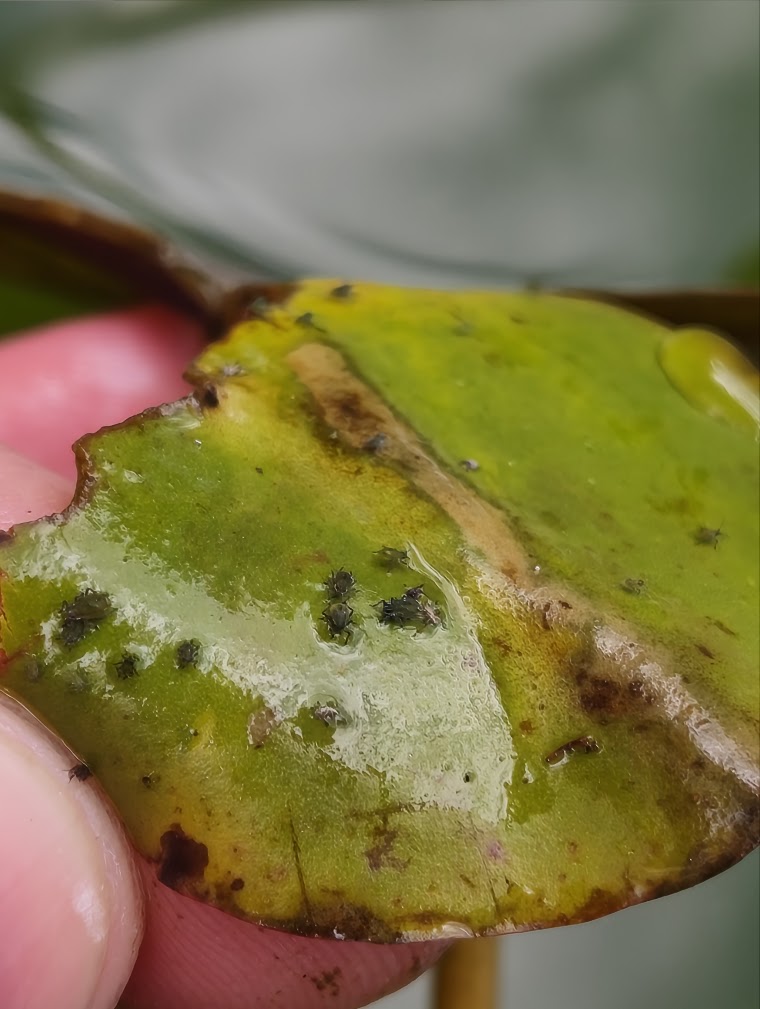
The four unnamed water lilies (Nymphaea) in the main pond are still adapting, with new shoots climbing up and unfurling the pads whilst older, larger pads die back as the plant adapts to its new home. On some of the yellowing leaves I found these spidery little creatures which are water lily aphids (Rhopalosiphum nymphaeae). They are actually a pest, and they will drain the sap from the lily pads and cause the yellowing we see on this example. They simply need brushing off into the water as, being terrestrial creatures, they can’t breathe under the surface.
At first I thought this structure was a leech, but upon closer inspection you can see it’s just water snail eggs with the developing embryo visible as faint little dots in the gelatinous matrix.
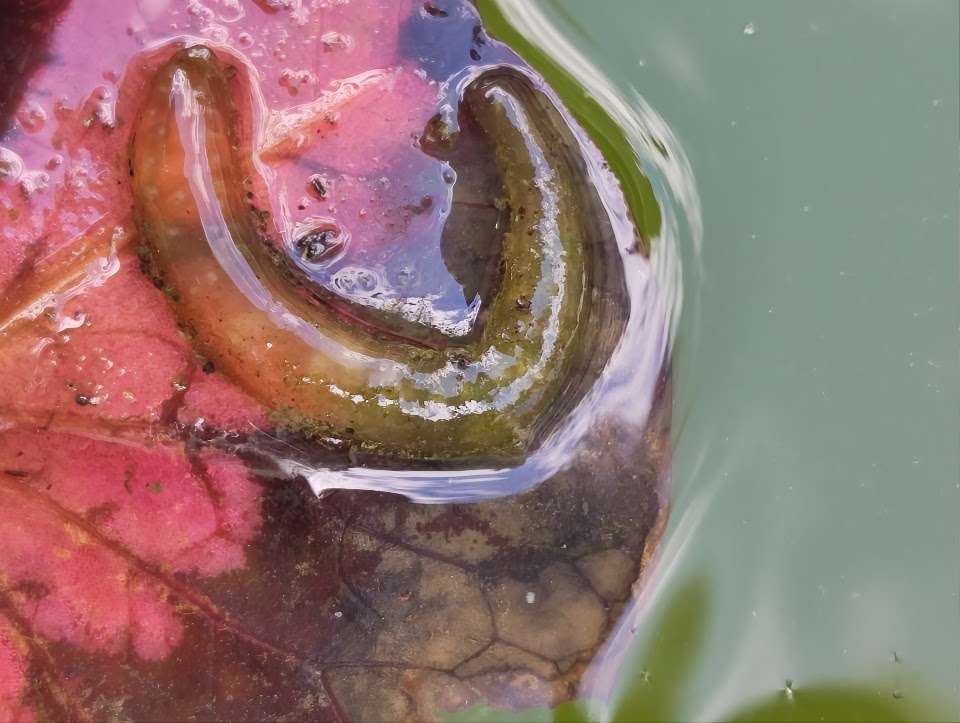
And after filtering a bit of rotting matter from the surface I spotted this live snail absolutely zipping along in completely the wrong direction so I quickly transplanted him to a nearby lily pad.
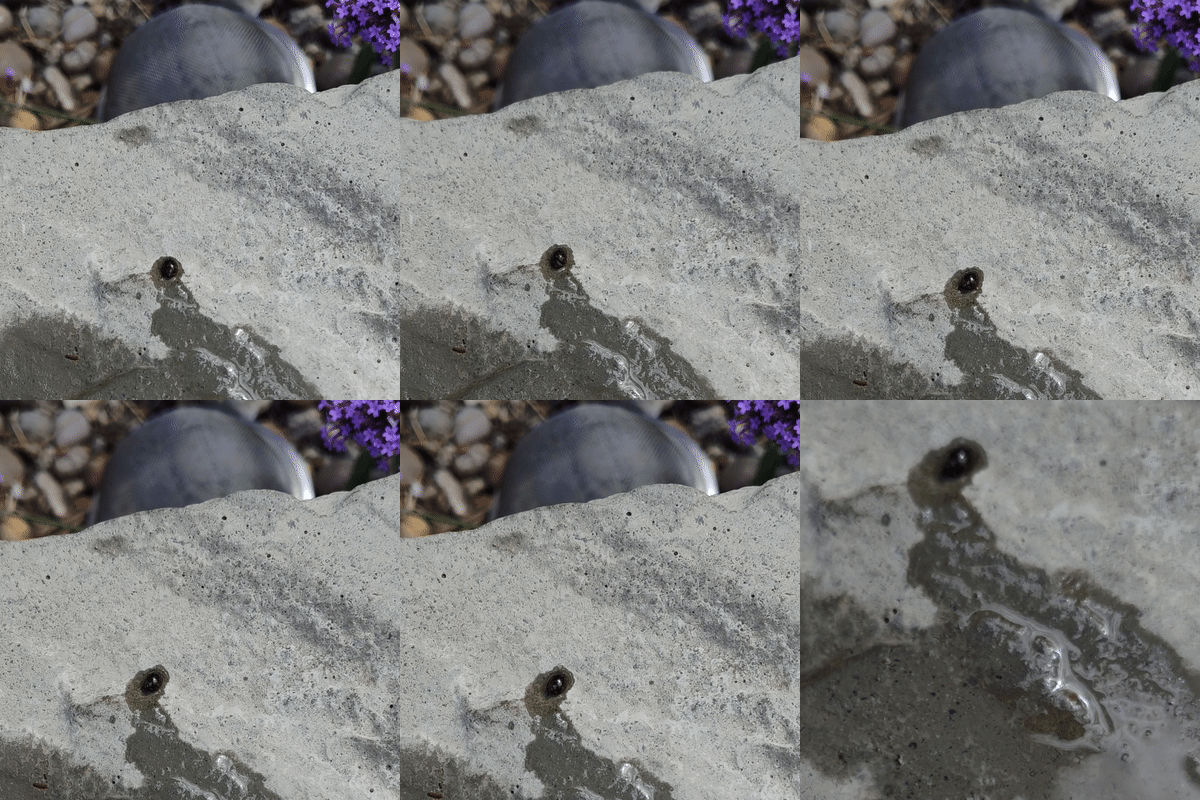
I also spotted this tiny bivalve mollusc which I think is a pea clam (Pisidium) or a fingernail clam (Sphaerium). They’re surprisingly mobile for a bivalve, climbing up stems and feasting on decaying plant matter as you can see in the middle here.
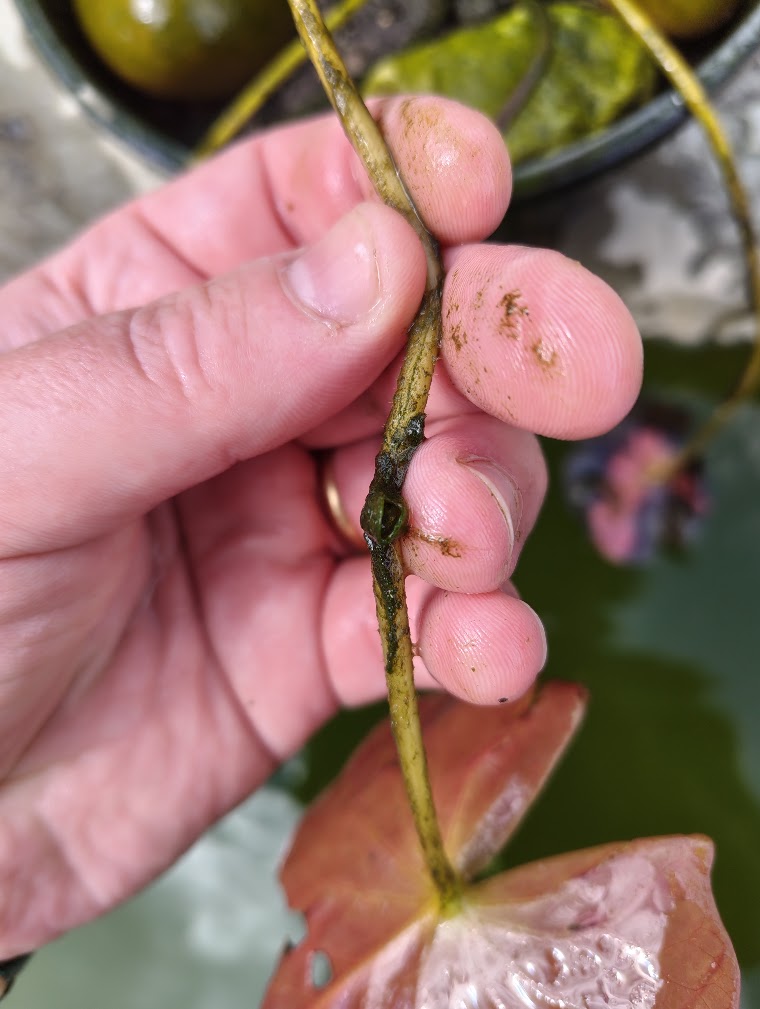
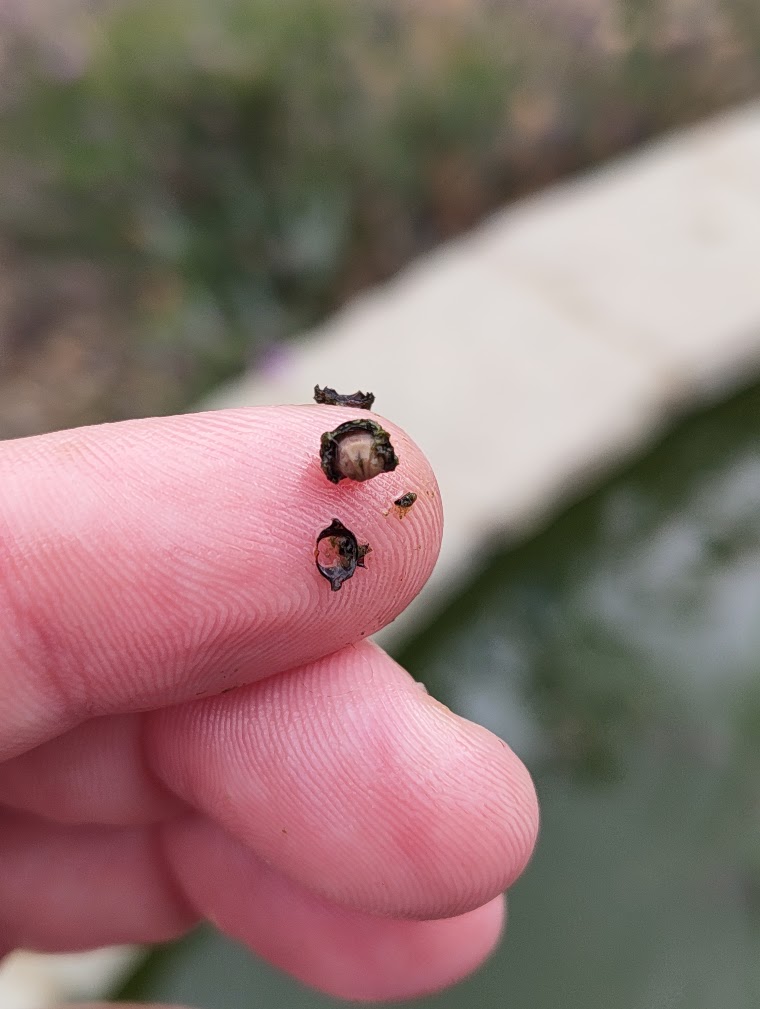
Definitely a mollusc as I accidentally cracked its shell a bit and you can see the internal gubbins looking like a delicious singular example of Moules Marinière. Sorry to this little fella, back to the nitrogen cycle you go!
Quick plant update, happy to report that the water starwort (Callitriche) is now thriving as I can’t stop pulling tiny little green shoots from the water column when I’m attempting to clear some of the excess organic detritus.
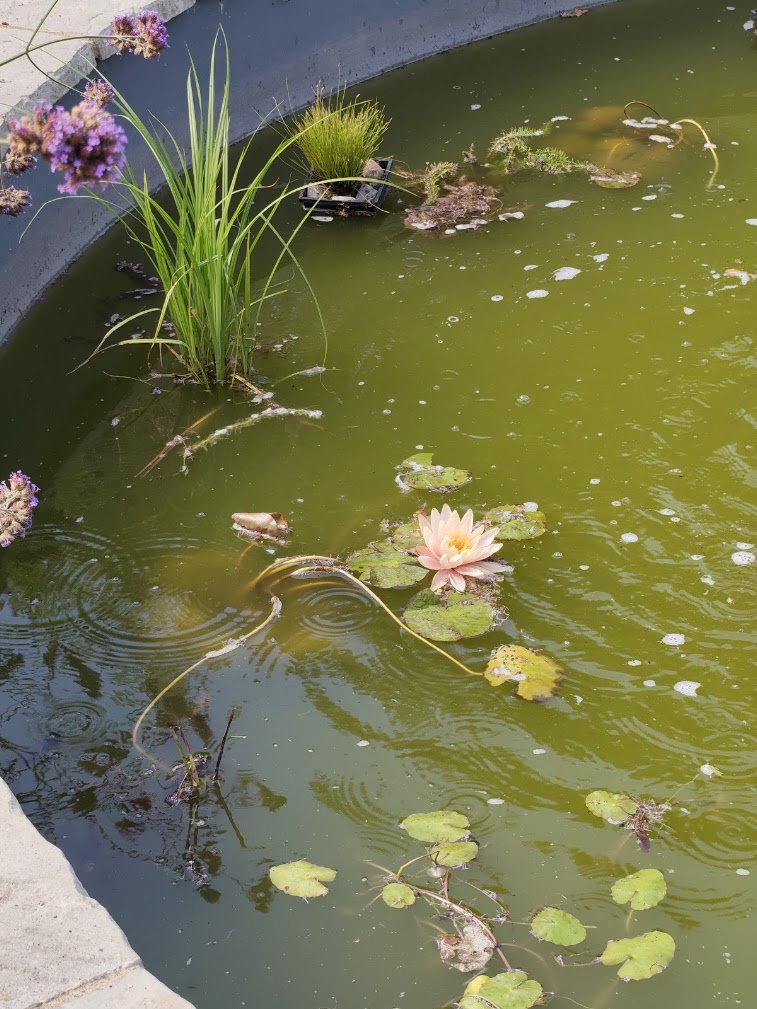
And probably the highlight of this whole venture yet is the flowering of this beautiful water lily. It’s a little bit of a cheat as the lily arrived in bloom and the bud just opened when placed in the water. We’ll have to wait until next summer to see if we have organically nurtured our own flowers from bud.
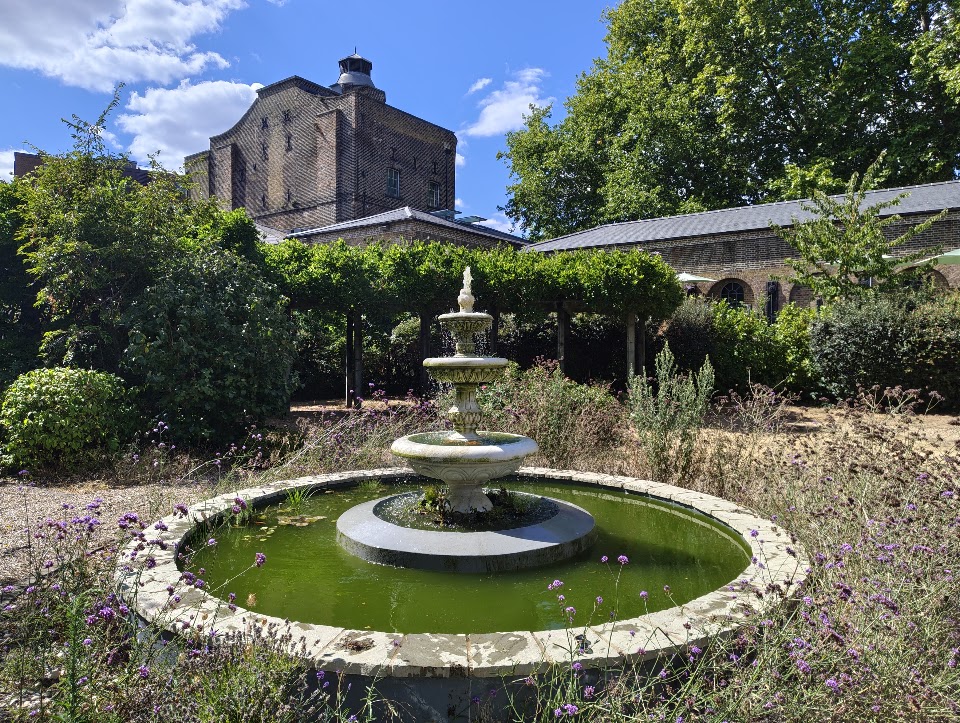
Here’s everything altogether. You can see I’ve moved the marginals up to the first shelf of the central fountain feature as I want to see which ones will benefit from the running water. I can already see that the forget-me-nots (Myosotis scorpioides) and the water mint (Mentha aquatica) are thriving here. I also placed a strand or two of the floating heart (Nymphoides peltata) that had become unanchored from its soil pot in this area to see how it does. I think both the brooklime (Veronica beccabunga) and creeping jenny (Lysimachia nummularia) are also doing a bit better here. I’m keeping an eye on the mare’s tail (Hippuris vulgaris) here though; they look like they’re struggling so I think it might prefer being submerged.
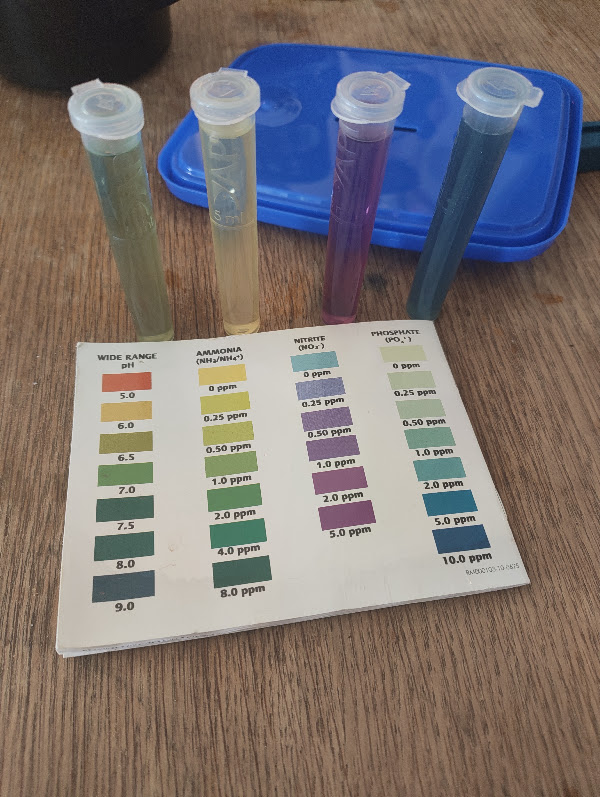
And finally here are the latest water results, showing a distinct drop in both pH and a notable climb in phosphate. This is exactly as expected as I (and Gerry!) replaced (by hand!!) over half a tonne of the water, thereby introducing more of the orthophosphates in London water and removing some of the alkali build-up.
I had actually been concerned that the pH was even higher than the upper boundary of 9 shown in my pond test kit so I also bought some litmus paper to test the full range. Pond water in the middle, lemon juice sanity check on the left.
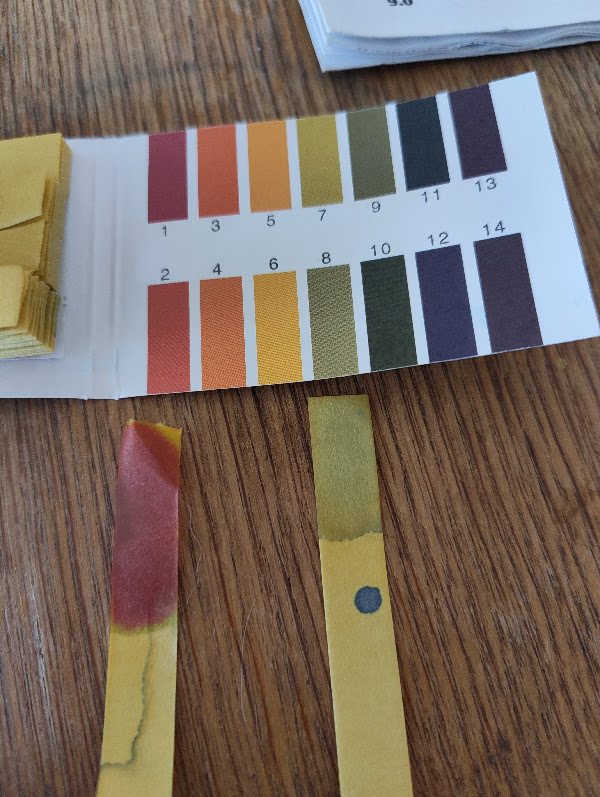
This assessment was confirmed a day later as the pH started to climb again. We’ll have to wait a while to see how high it really goes. Sidenote, I have put the nitrite and the phosphate test tubes in the wrong position in the following pic.
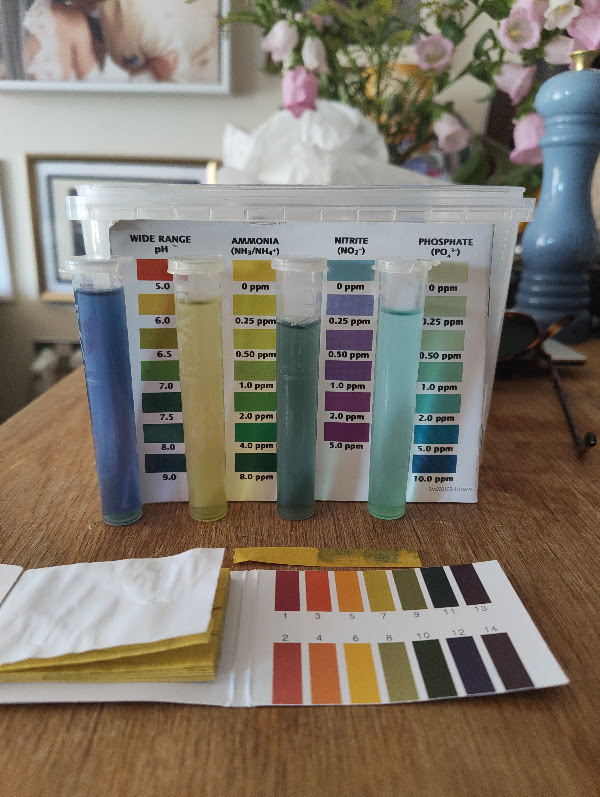
| 19 Jul | 25 Jul | 28 Jul | 06 Aug | 07 Aug | |
|---|---|---|---|---|---|
| pH | 9 | 9 | 9 | 7 | 8 |
| Ammonia | 0.25 ppm | 0 ppm | 0 ppm | 0 ppm | 0 ppm |
| Nitrite | 0 ppm | 0 ppm | 0 ppm | 0.5 ppm | 0 ppm |
| Phosphate | 1 ppm | 5 ppm | 1 ppm | 5 ppm | 5 ppm |
Finally a shout out to my one and only patron, Lexy. Thank you for the support, without your likes and subscribes (and financial donations) I simply could not keep up this riveting stream of #content. You are now the patron of the strongest Nymphoides peltata Floating Heart. Contact me for visitation rights.