water, plants, wildlife
More plants!
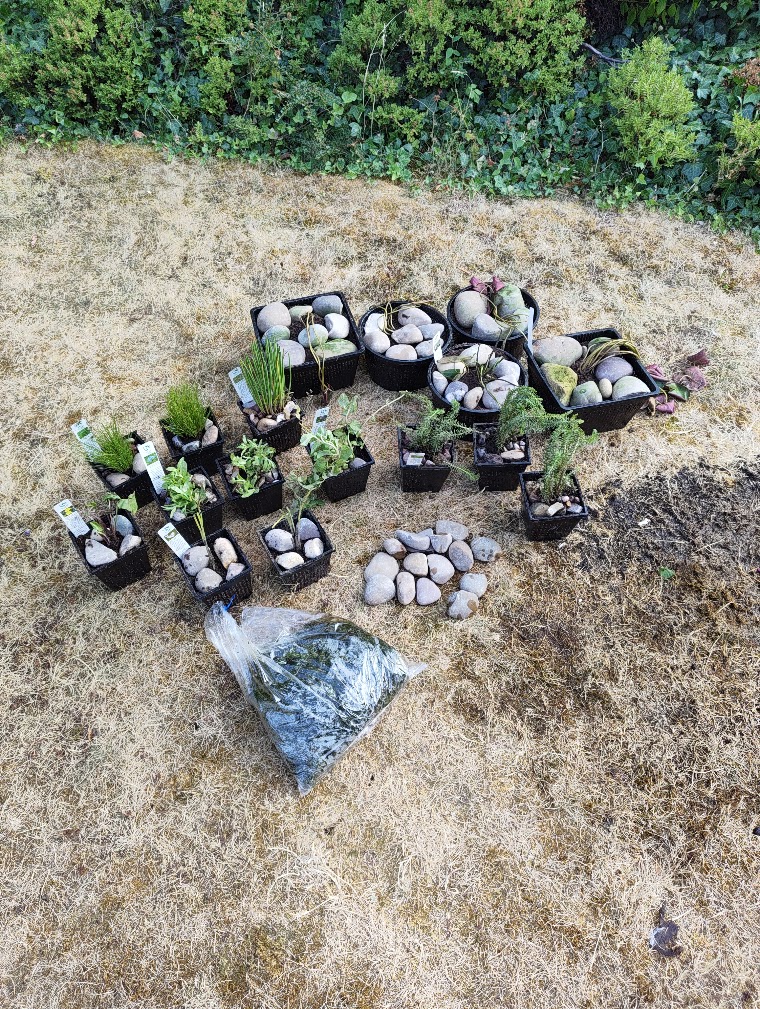
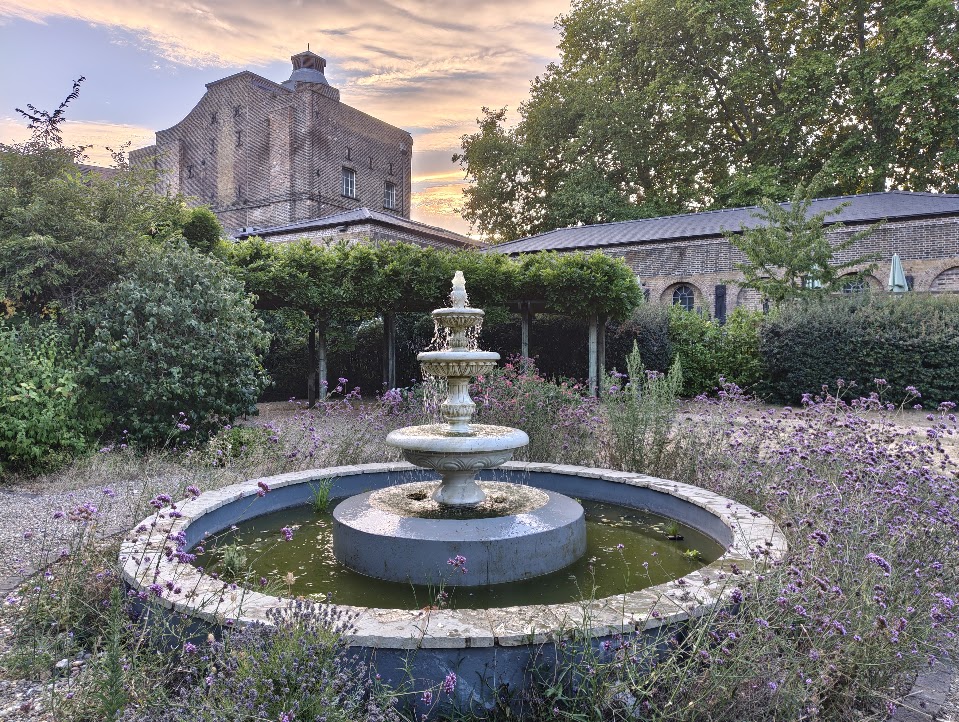
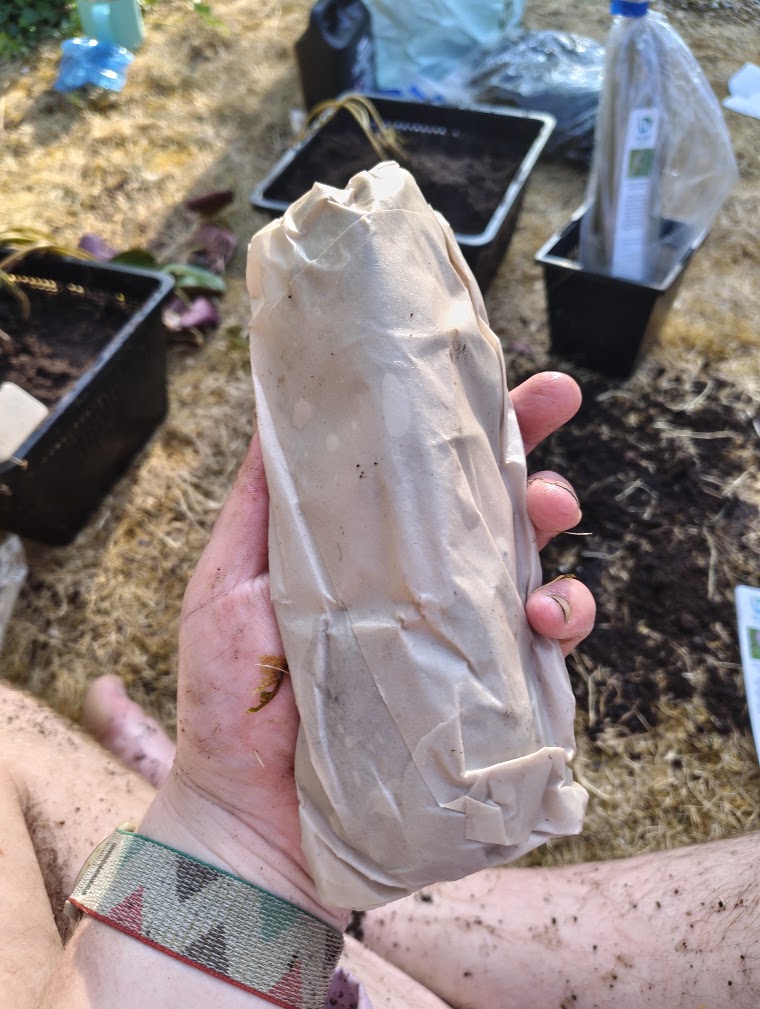
After ordering the plants over the weekend they arrived rather speedily, early on Tuesday morning. As we’re still in the midst of a dry, dry, dry heatwave, I wanted to get the plants out of the wet-paper-towel packaging and into the water as soon as possible. However, before doing so I heard that someone in the building had asked the manager why the fountain was so green, so I took to a bit of manic scrubbing in a rather paranoid manner.
What I thought would take 20 minutes or so took a proper hour, and I’m a bit worried I might have traded a short-term aesthetic win for a longer-term, downstream problem. Only time will tell if I’ve either knocked too much biofilm and algae into the water column, or scrubbed the masonry so hard it’s leached some more alkaline sediment into the already heavily alkali mix.
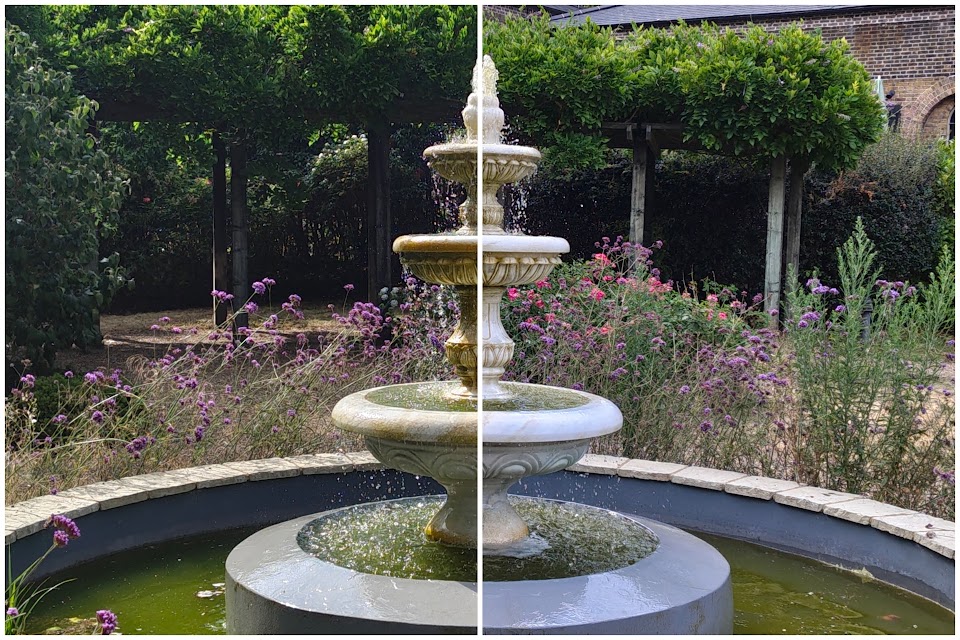
I also tested the water before and after, with not much change between the two, so I’ll just add that last reading to the record. Fuelled by pure complaint paranoia, I also added some flocculant. This will cause the algae to flocculate into larger clumps, hopefully clearing the water a bit and reducing the putrid look of this festering mess.
| 19 Jul | 25 Jul | 28 Jul | |
|---|---|---|---|
| pH | 9 | 9 | 9 |
| Ammonia | 0.25 ppm | 0 ppm | 0 ppm |
| Nitrite | 0 ppm | 0 ppm | 0 ppm |
| Phosphate | 1 ppm | 5 ppm | 1 ppm |
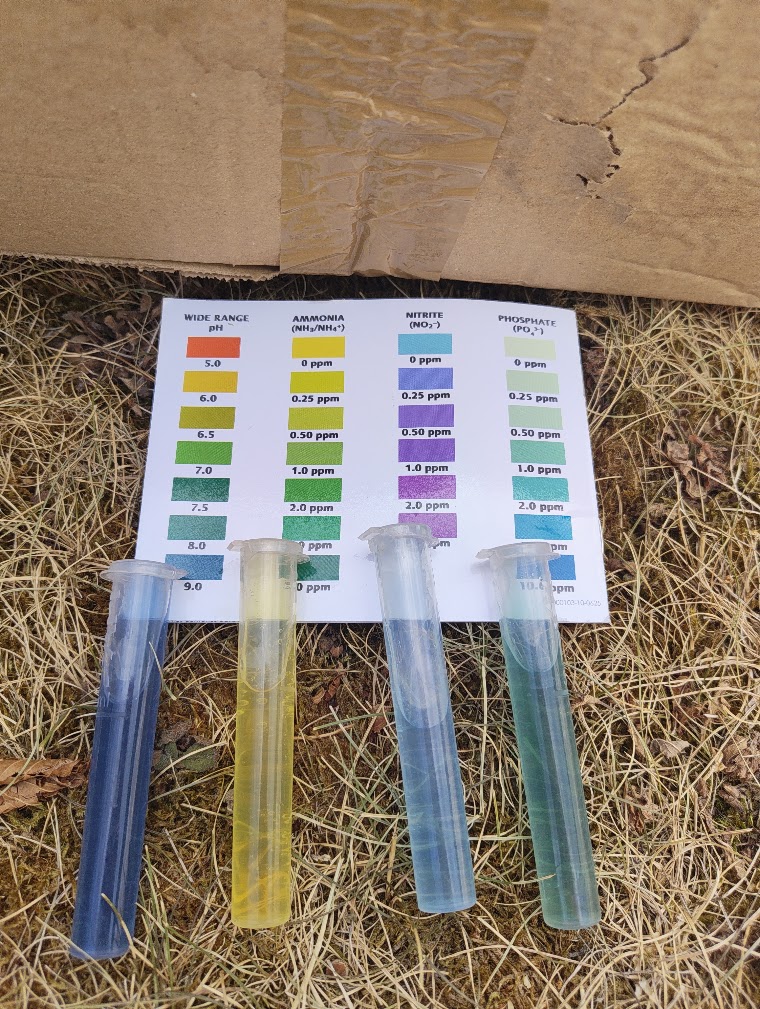
Whilst I was at it, I also filled in a suspicious-looking leaky crack in the fountain wall with a bit of Milliput. Again, I’m not sure if this will have an effect on the water chemistry, but I decided this was a move-fast-and-break-things kind of day — which seems counter to the whole philosophy of pond building, but I’d rather sacrifice a few of the delicate plants to urgent maintenance issues than risk the whole project being cancelled under accusations of leek and peasoup… sorry for that.
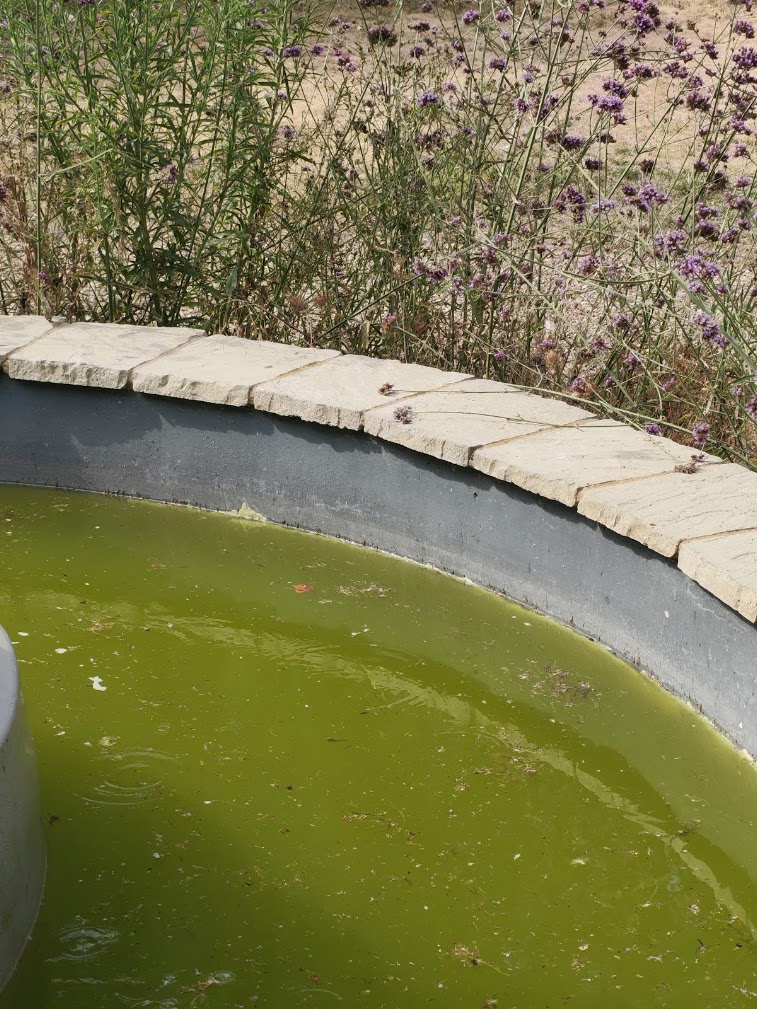
Whilst I was doing all of this, I decided to remove the pre-existing plants from the pond to take stock of the root systems and assess which plants are the truly voracious ones, especially when I was about to plant a whole lot more. I also wanted to remove as much dead, rotting matter as possible.
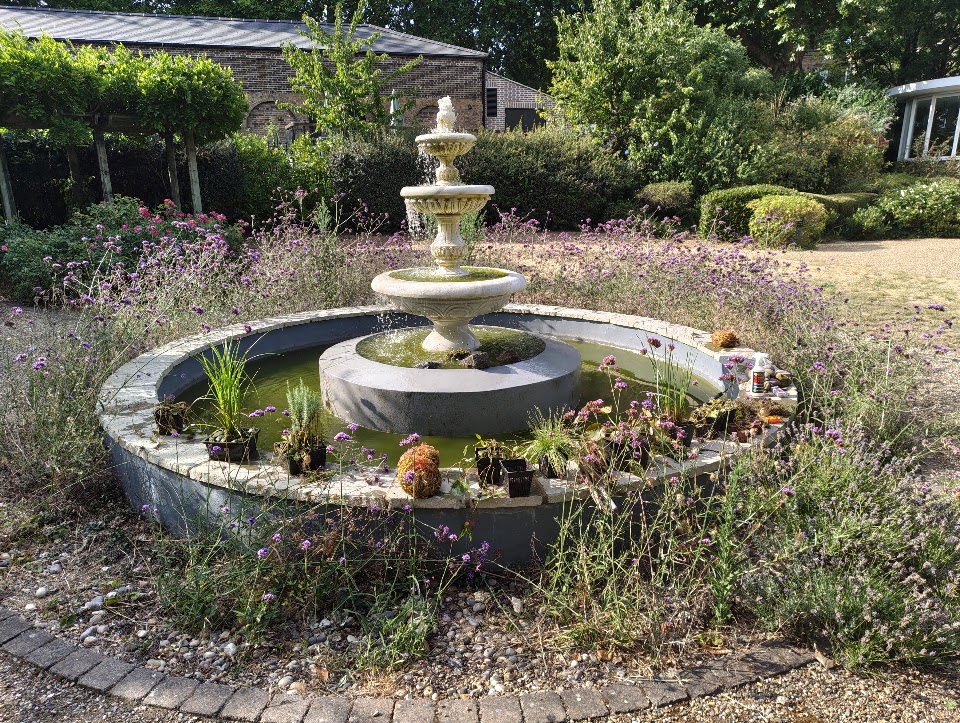
One of the issues with this planting arrangement is I have a lot of Verbena bonariensis dropping petals into the pond with utter gleeful abandon. Not a care in the world for my water chemistry, probably only adding to the very high phosphate levels we’ve been witnessing. Selfish! Looks nice as a border though, so can’t complain too much.
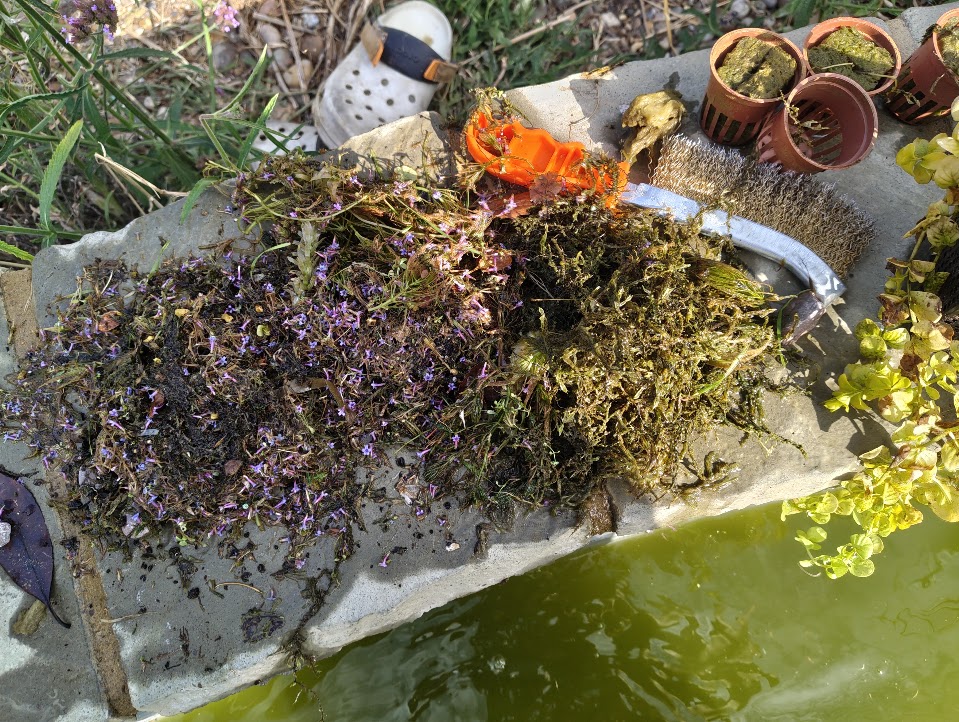
Here’s a quick update on the status of the current plants:
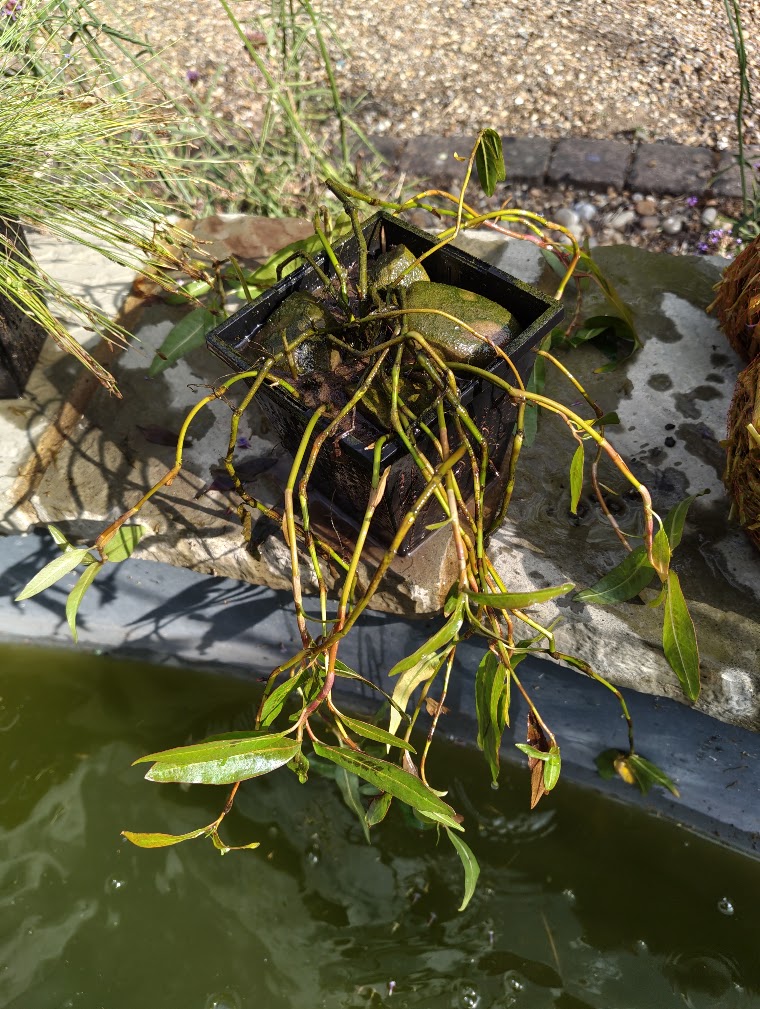
Water starwort (Callitriche) — I knocked this pot over whilst clearing the pond and subsequently lost the tiny green tendril that was rather precariously clinging to the soil. I’m not sure it matters though, as I keep spotting little strands of it floating quite happily on the surface, so I think it’s just left its earthly bonds and is propagating slowly but happily in the free water.
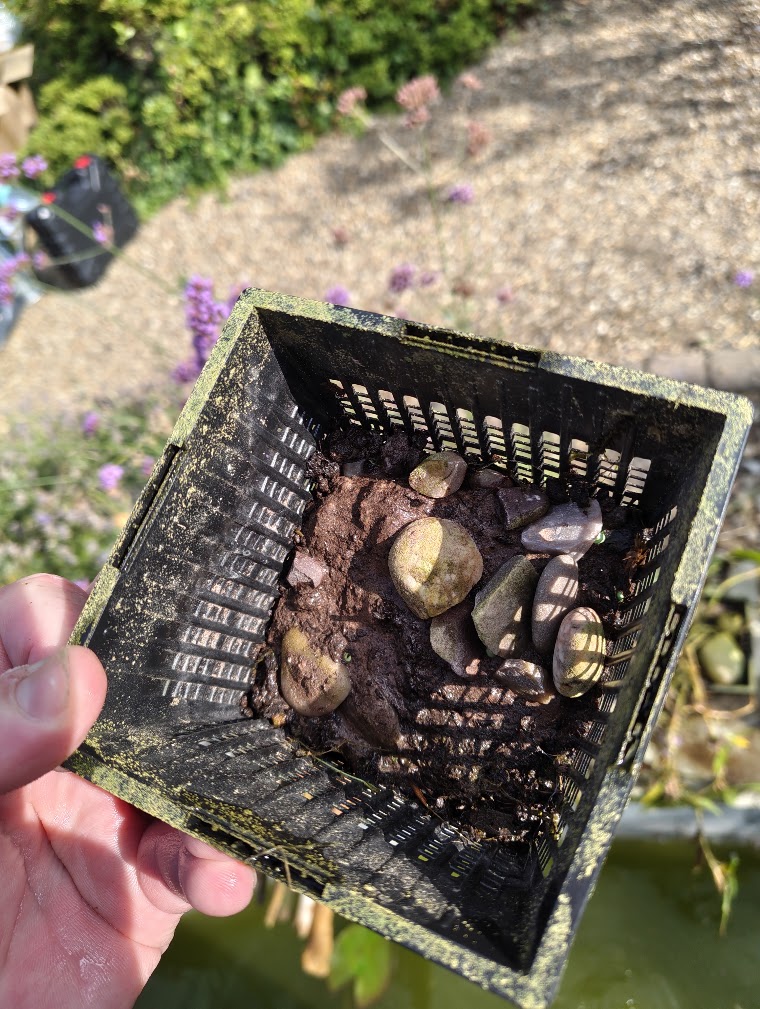
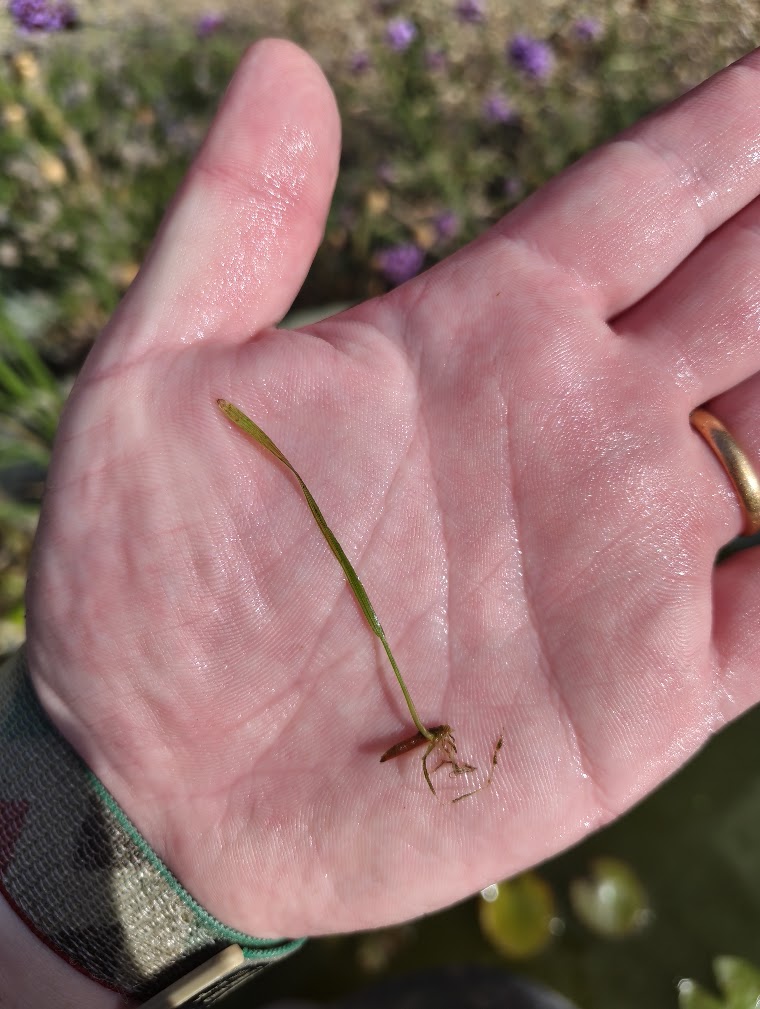
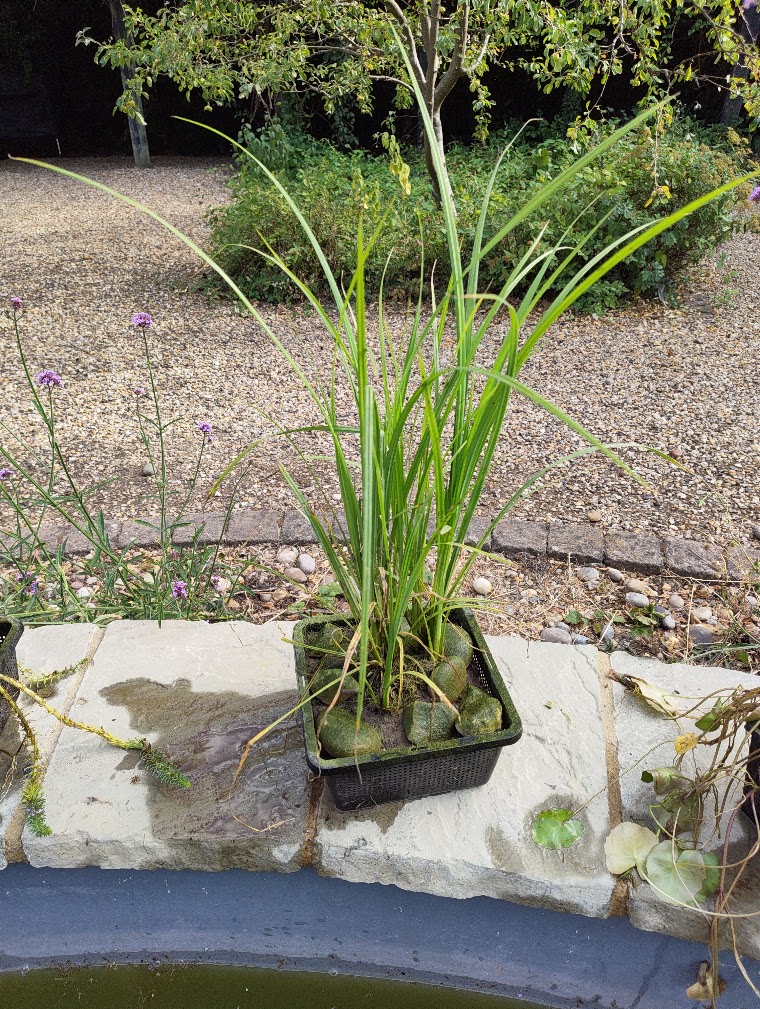
Disclaimer: I’m not actually sure the green shoot I’ve just shown is the starwort, but trust me, there are other more Callitriche-looking shoots just bobbing about looking very green and healthy in the main pond. The flowering rush is perhaps the most voracious of the root systems — it seems to be bursting out of its basket like some Lovecraftian, potato-left-in-a-dark-cupboard nightmare.
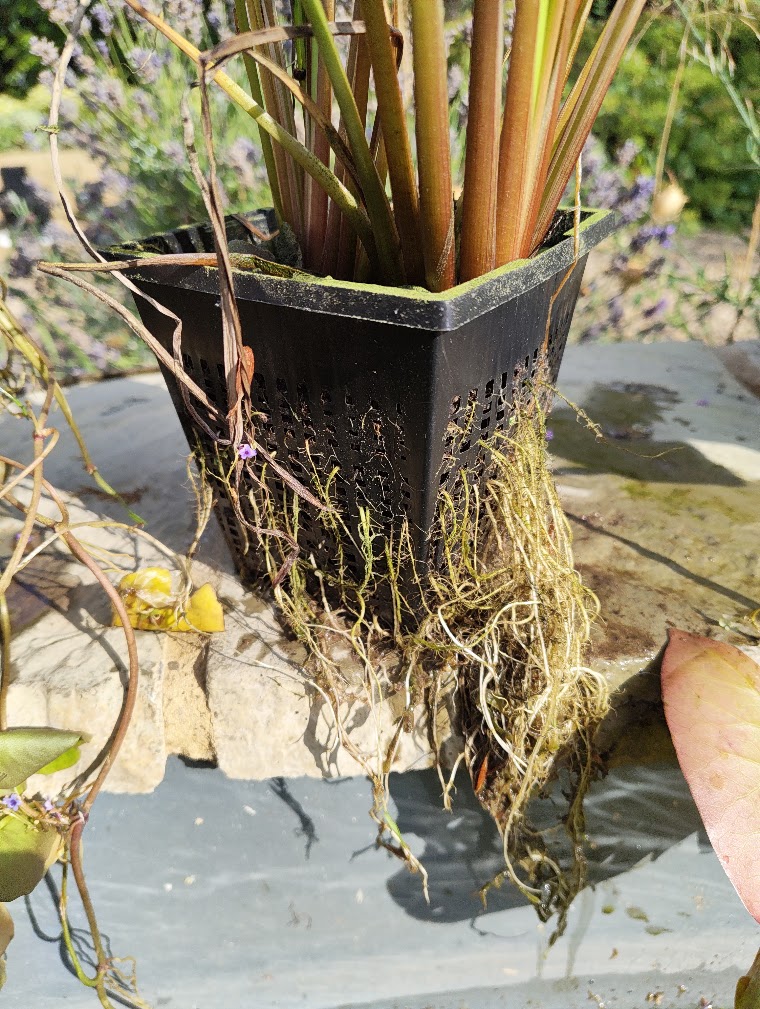
Same for the mare’s tail, which has even managed to break through the plastic basket and shoot upwards towards the sky in a classic case of phototropism/negative gravitropism. It’s actually super interesting how this plant figures out how to shoot upwards, as you can see in the foreground of this image. The tissue of the plant contains subcellular structures called statoliths. These organelles are packed with dense starch granules that sink under the influence of gravity. Their settling triggers a signalling mechanism that redistributes a growth hormone known as auxin towards the lower side of the stem. Because shoots respond to more auxin with more growth, the underside grows faster than the top, and the shoot curves upwards.
A nice analogy to this phenomenon: if the tyres on the right-hand side of a car spin faster than the left (i.e. quicker growth on one side), the whole vehicle changes direction. That’s basically the “wavefront” analogy we’re taught for Snell’s law in optical physics too, a nice bit of cross-disciplinary symmetry.
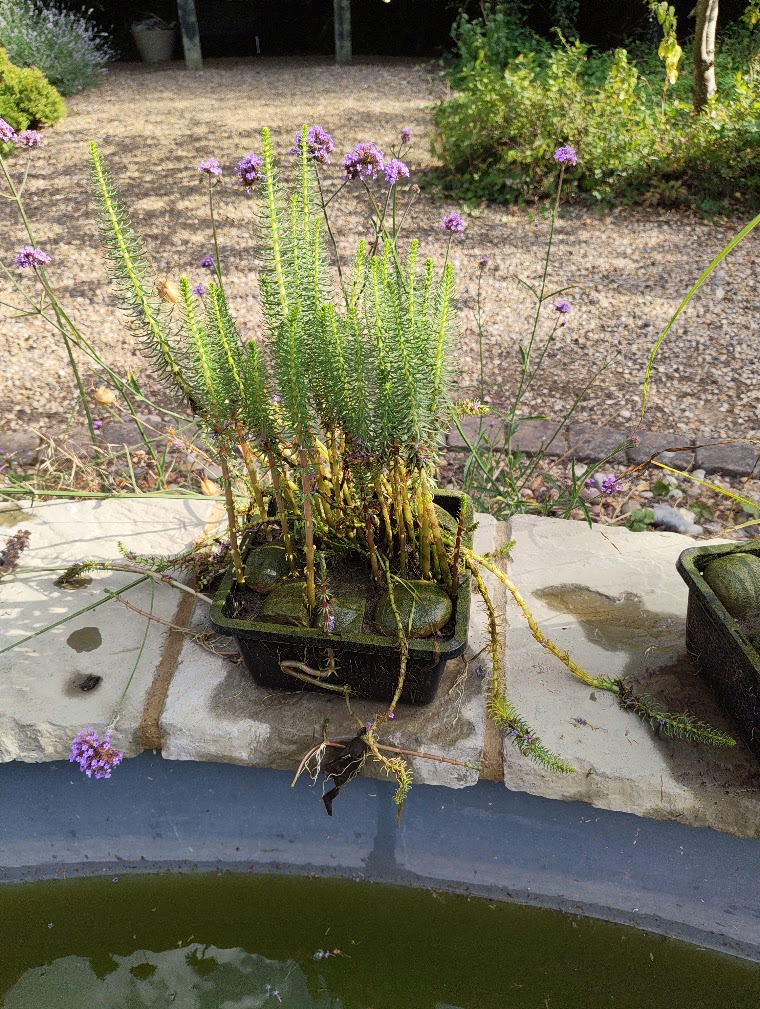
I’m still a bit unsure on the creeping jenny and the brooklime (beccabunga) — they seem to be teetering on the edge of something, whether that’s life or death I do not know. The biofilm was building up quite aggressively on the creeping jenny, despite having raised it above the water, so later on I moved it to the upper tier of the fountain.
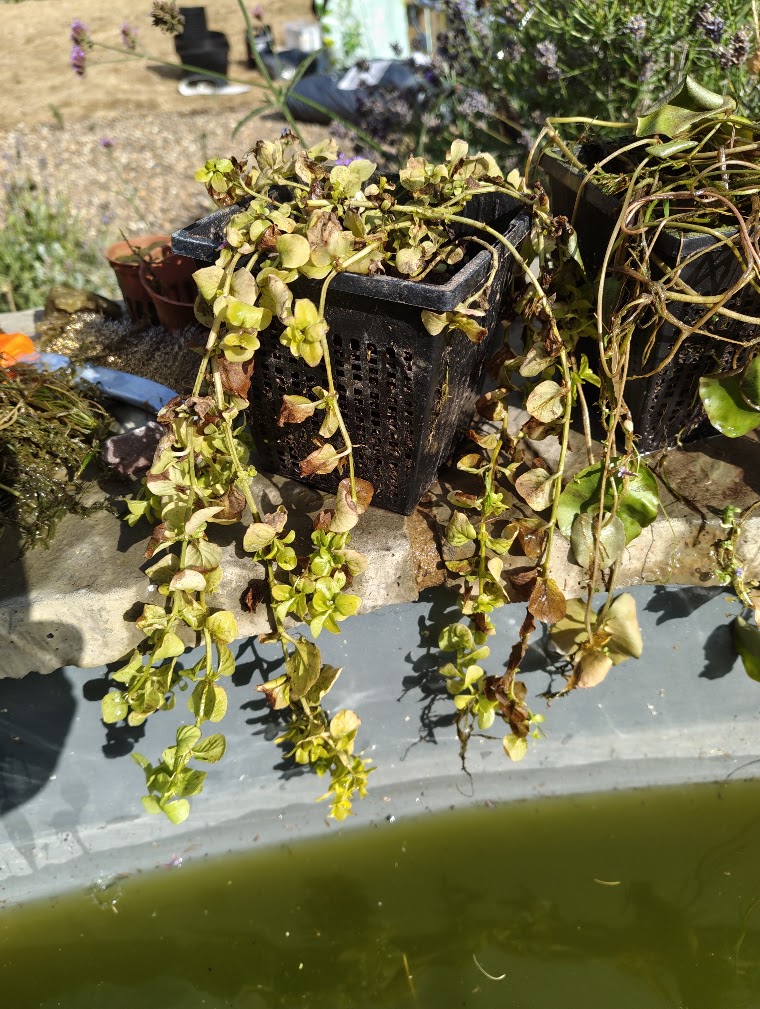
Floating heart is the same as previously: it looks like it’s struggling, but I’m beginning to understand that this is just natural-ish leaf turnover for this lily-like plant. It’s still sending up new shoots and seems to be making a lot of effort to extend laterally. Look at those green shoots!
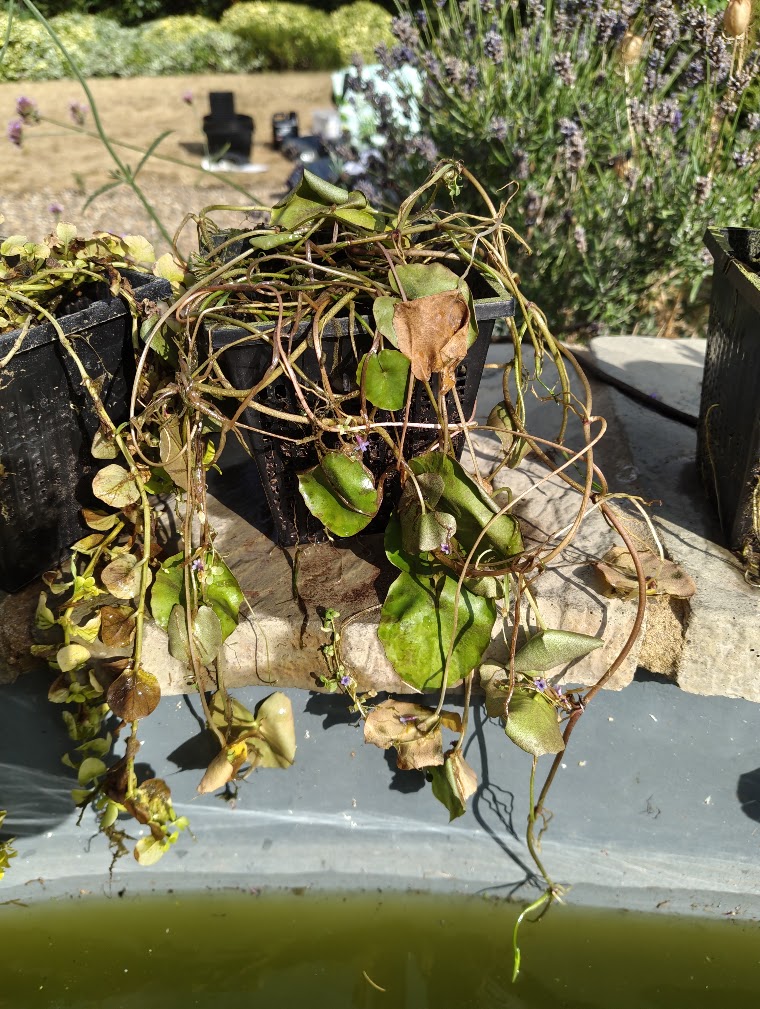
The alba lily is still thriving, and was the plant I felt suffered the most from being out of water for a couple of hours as its leaves started curling up after less than an hour.
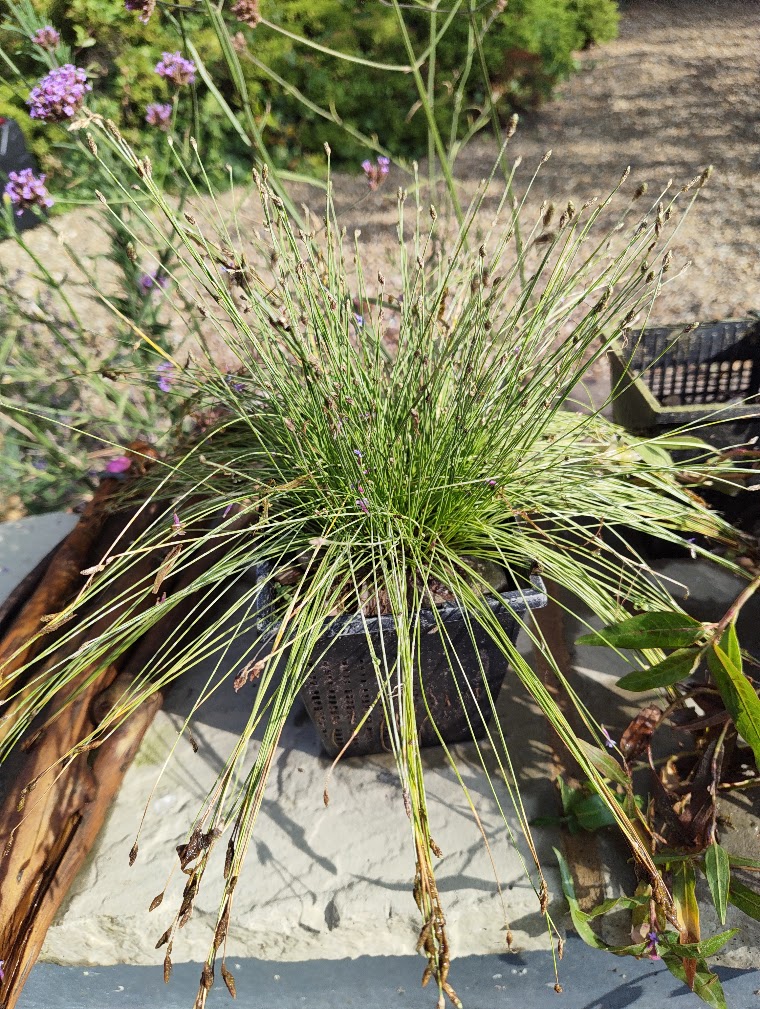
Fibre optic plant, willow grass (knotweed), and lesser pond sedge (carex) are all doing fine.
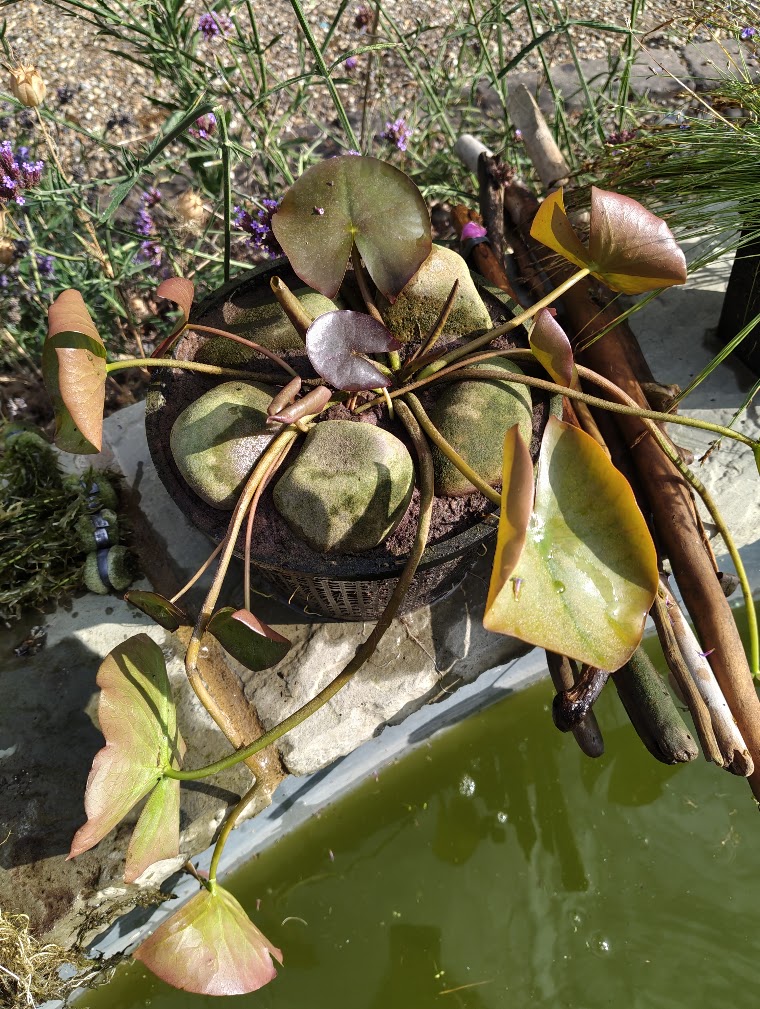
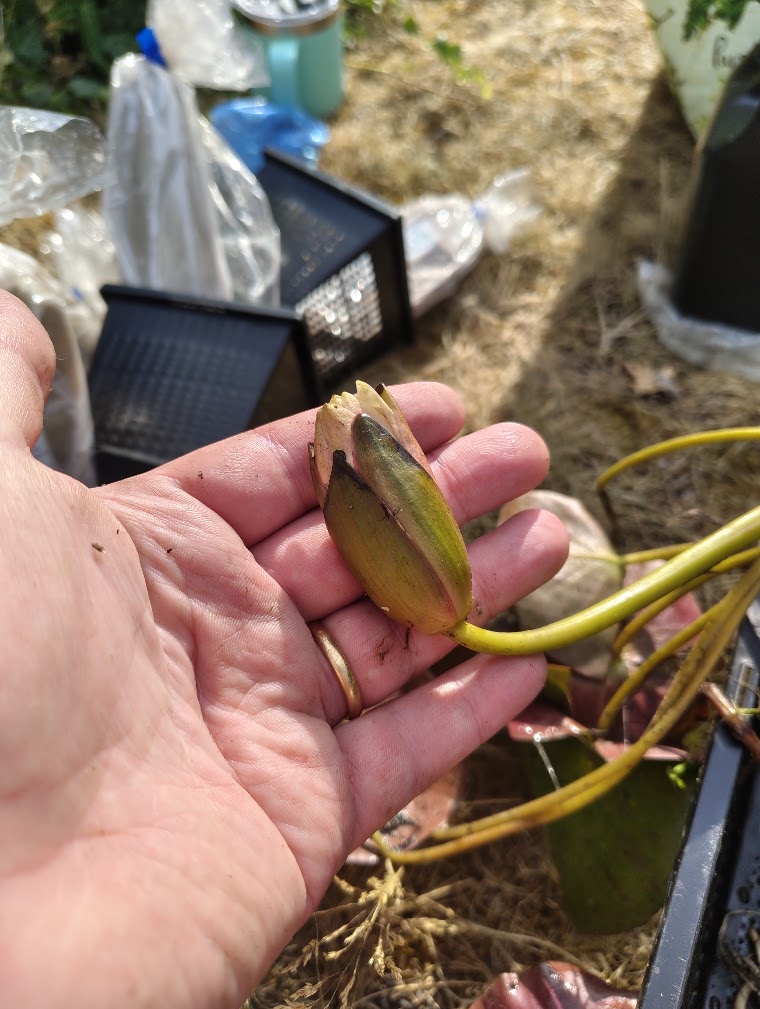
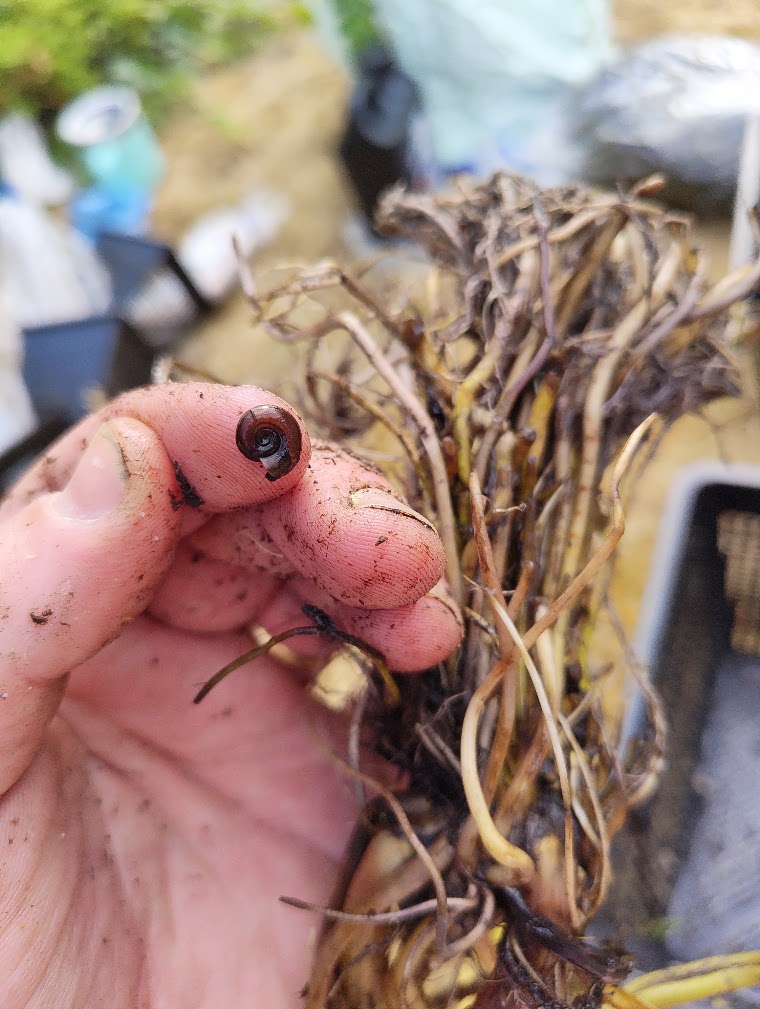
Planting out again, I was super pleased to see that I’d been shipped a lily with a pink flower already in bud! This great pic also shows a little hitchhiking snail on the root bundle, as well as the knotted, gnarled rhizome at the bottom left. I derive a great amount of satisfaction from unwrapping these alien-like tubers from their wet paper wrappings, like a soggy pass-the-parcel.
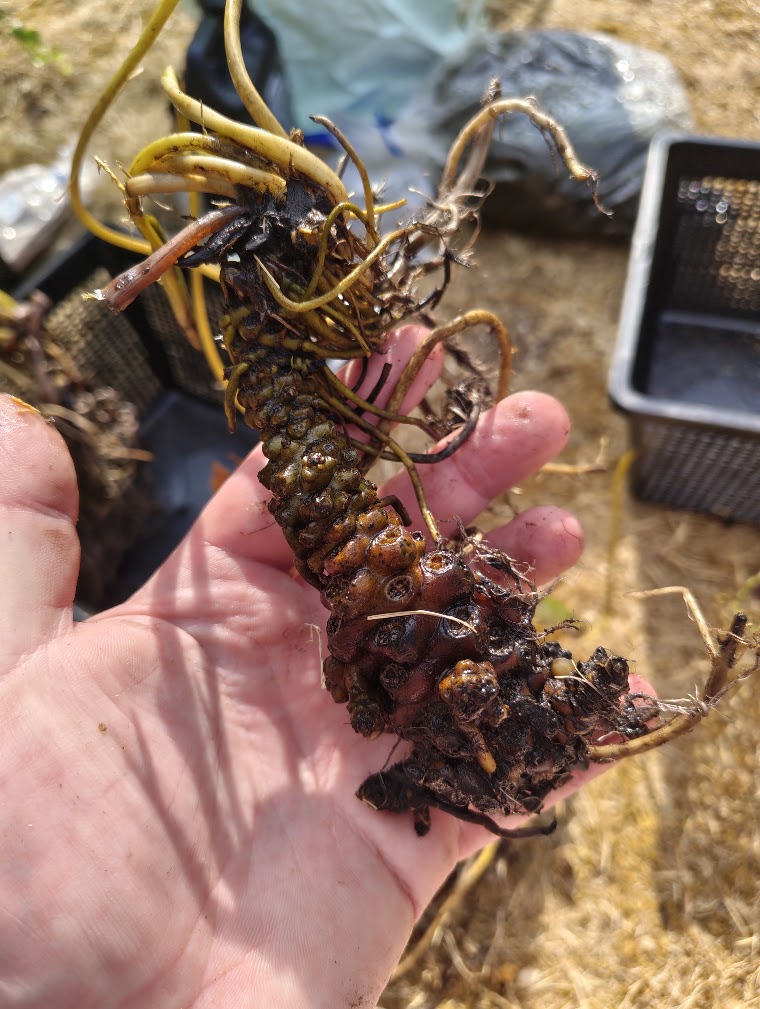
Rhizome is a word I hadn’t necessarily come across prior to this project. It comes from the Greek root (sorry, again) word rhizōma, meaning “mass of roots.” Despite the name, a rhizome isn’t strictly a root but a modified stem, a great example of modern biological understanding usurping old botanical terminology, a common and interesting theme. These structures can continually send up new genetically identical shoots, creating massive clonal colonies and conferring a huge regenerative evolutionary advantage. Fun fact: the heaviest known living organism is Pando, a single clonal quaking aspen (Populus tremuloides) in Utah. This organism features thousands of genetically identical stems sharing one root system, weighing an estimated 6,000 tons and connected by a single, colossal underground rhizome network.
Anyway, here’s everything all planted and in the fountain together.