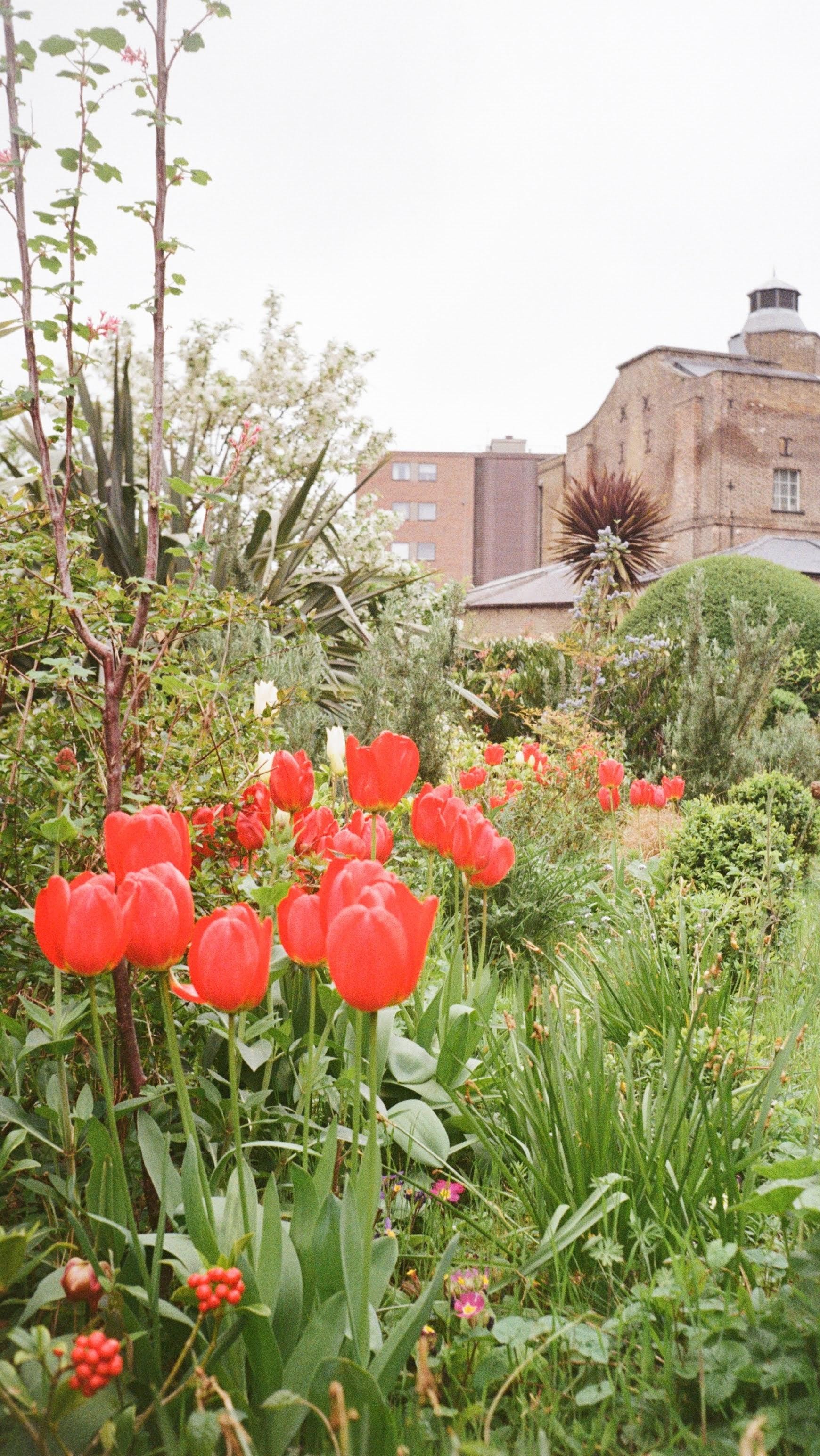
water, plants, wildlife, invertebrates
Taking stock
I’m taking stock of each plant individually today as I’m going to order another batch to try and fill the rest of the fountain. I’m also considering decanting some of the plants from my balcony pond as it’s getting a bit crowded in there.
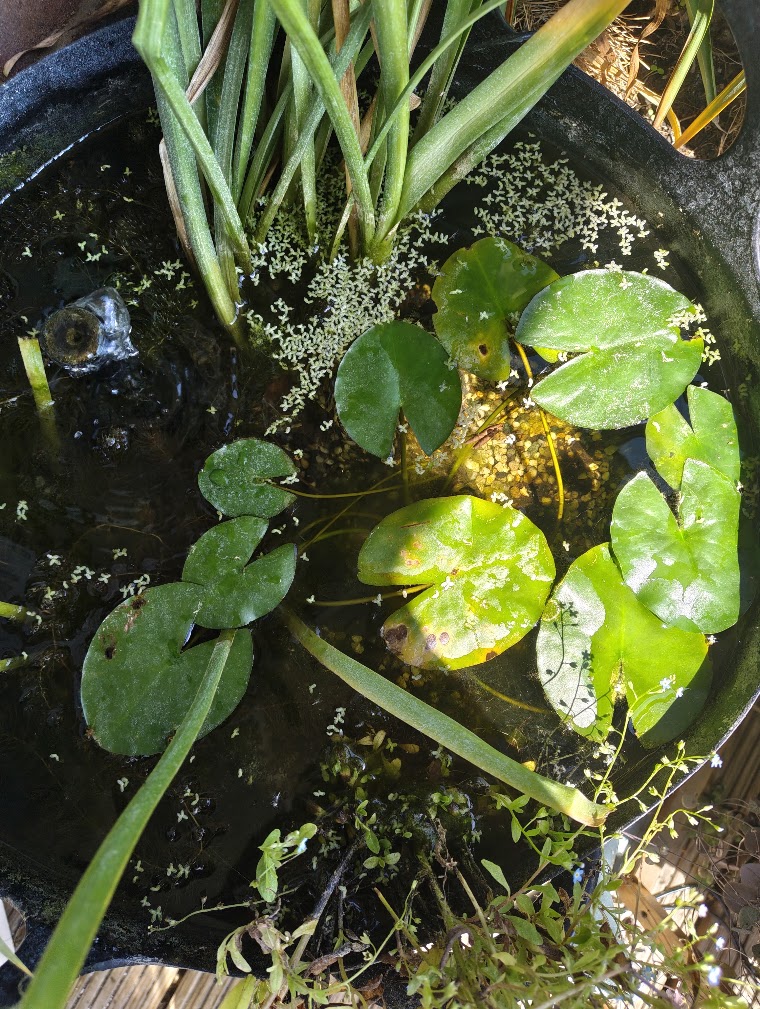
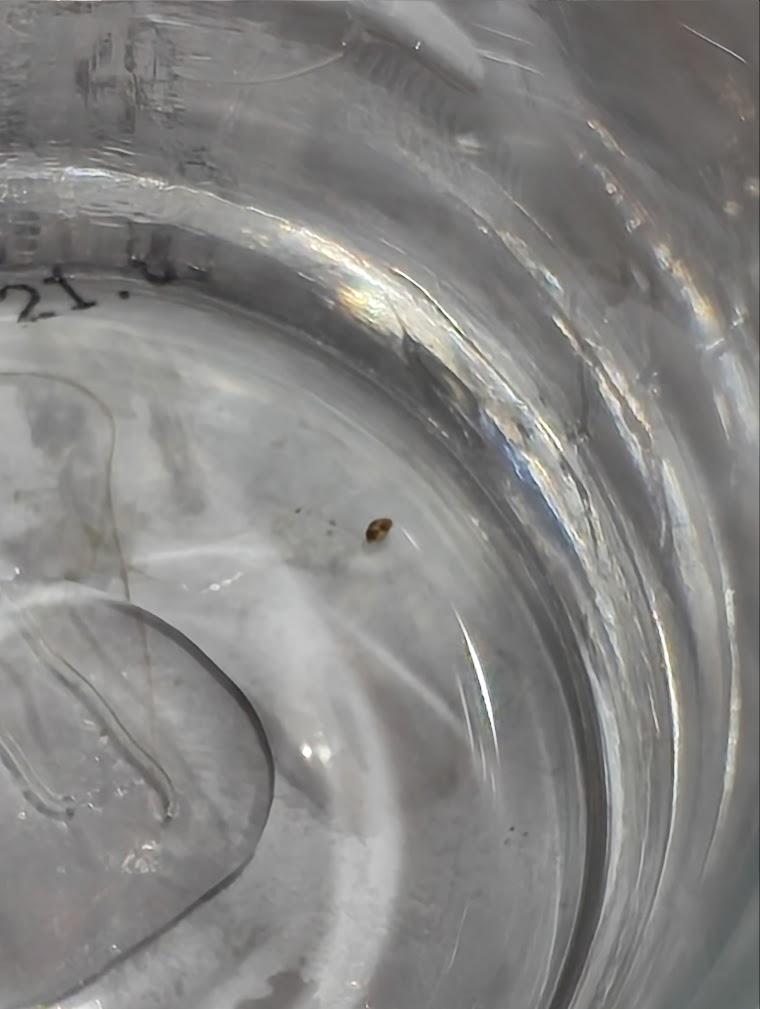
A little bit of research has informed me that now is probably not the best time of year to split the pygmy lily (Nymphaea) despite it proliferating on my balcony. I might take the Leucojum down and perhaps a few irises. Hopefully this will have the effect of introducing a bit more invertebrate life into the fountain pond too. I was pleased to notice what I think are seed shrimp (Ostracoda) flying about beneath the surface of the lily pads like little flying cars nipping about their underwater metropolis. I managed to catch one in a shot glass and take a terrible image that doesn’t really confirm anything, but to the naked eye they definitely have a very similar morphology. It’s great to see these ostracods zooming around this environment as they are scavengers and detritivores that graze on the type of biofilm that’s currently turning the main fountain pond green. This got me thinking perhaps I should build a microscope to start properly identifying these critters.
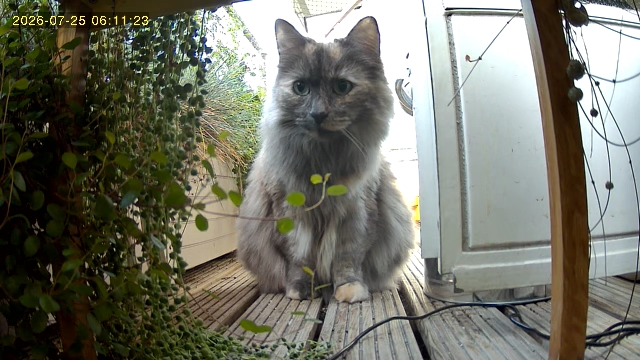
I also have a security camera that I am considering deploying with some sort of automated wildlife detection image processing pipeline, although this will be resolution-limited so only useful for identifying larger avian or mammalian visitors, birds and foxes etc. It doesn’t seem like too much of a step away from the kind of thing I have been doing as a profession for the last decade or so: object detection, tracking and classification from (microscopy) images. I just need a suitable training data set, of which I’m sure there are plenty of open source ones, and a couple of free days to script an automated pipeline. I’ll have a think about it…
As well as the presence of ostracods and snails, one key difference between the clear waters of my balcony ecosystem and the peasoup downstairs is the relative abundance of oxygenators such as hornwort (Ceratophyllum demersum). I think I have approximately 8 bunches in my balcony versus about twice that in the main pond. I think that ordering a significantly larger amount of oxygenators and perhaps transplanting some from the balcony pond is probably the most cost effective way to fight off the biofilms that are still coating the walls and base of the communal pond. I ran a quick water test on my balcony pond to compare to the fountain pond and note that both are similar, so hopefully any transplant won’t be too much of a shock.
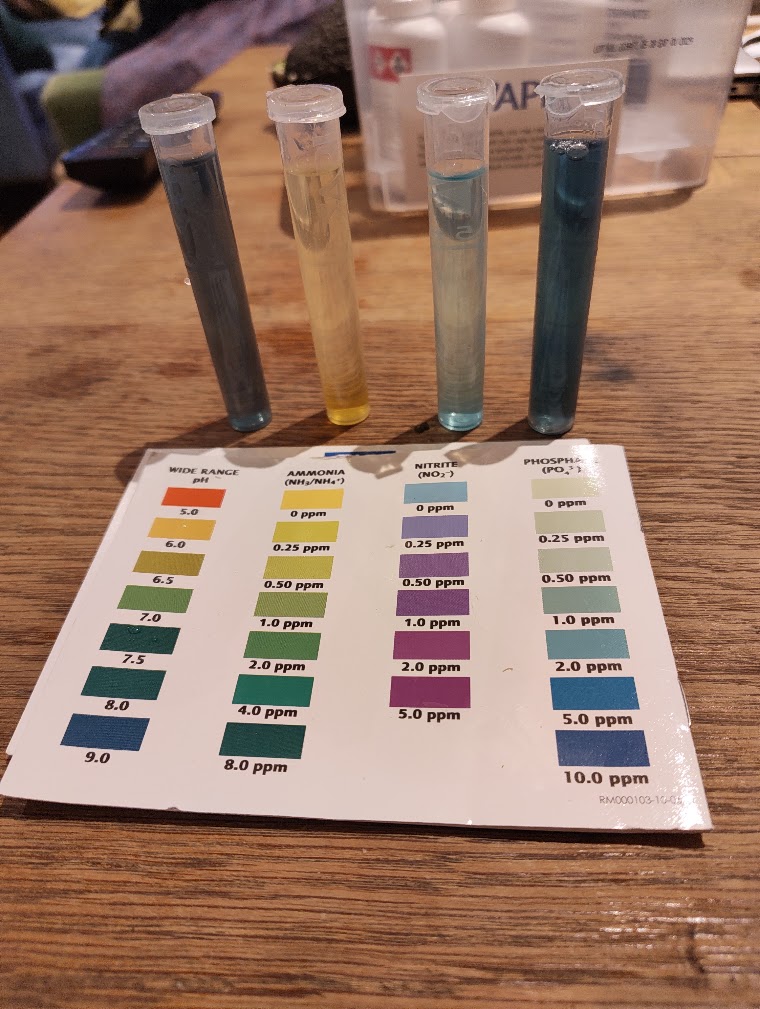
| 25 Jul | |
|---|---|
| pH | 8–9 |
| Ammonia | 0 ppm |
| Nitrite | 0 ppm |
| Phosphate | 5 ppm |
And here are the latest test results from the fountain pond.
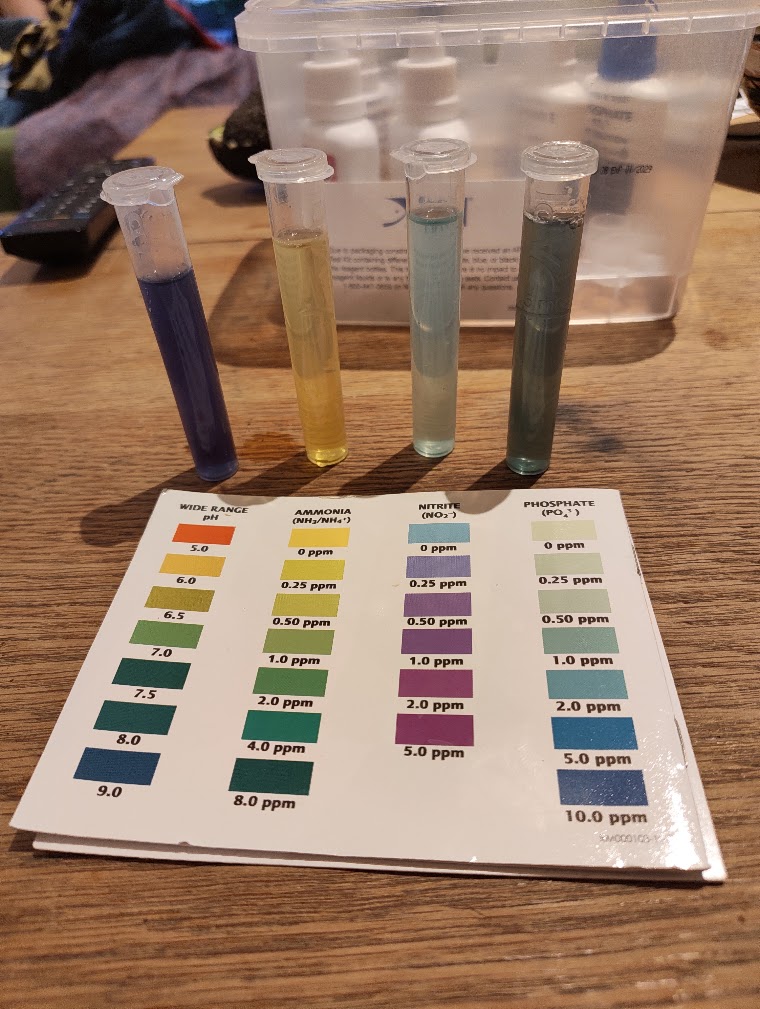
| 19 Jul | 25 Jul | |
|---|---|---|
| pH | 9 | 9 |
| Ammonia | 0.25 ppm | 0 ppm |
| Nitrite | 0 ppm | 0 ppm |
| Phosphate | 1 ppm | 5 ppm |
These results tell a bit of a mixed picture. Between this test and the previous we topped up the fountain with (dechlorinated) hose pipe water (prior to the ban) so this probably explains the increase in phosphate levels again: London tap water will have something called orthophosphate in it. This is what’s called plumbosolvency control and is a lead-mitigation measure. A large amount of UK housing will still have lead piping in some capacity, so dosing water with phosphoric acid will cause that dangerous lead to precipitate into insoluble lead phosphate minerals. Sidebar, but one of my favourite etymological quirks is regarding lead. It has the elemental symbol Pb which comes from the Latin plumbum, from which we derive plumbing, plumb lines (that used lead weights), plummet, plunge, the French-derived aplomb (according to the plumb line, perfectly perpendicular, someone who hangs straight) and of course all the continental unleaded petrol terminology: sans plomb, sin plomo, senza piombo and my favourite, the Portuguese sem chumbo. A bit of extra reading tells me that plumbum probably isn’t Indo-European at all and might be a loan word from an Iberian substrate, as Iberia was Rome’s main lead source. Anyway, excuse the musing there, I’m reading the fantastic Proto by Laura Spinney at the moment so my brain’s all etymologically orientated.

With the heatwave and subsequent evaporation over the past week or two, topping up the fountain will only serve to increase the concentration of phosphate over time. The best solution for this is introducing more hornwort and other plants to take up that excess PO₄³⁻. But which plants to add? Here’s an update on each.
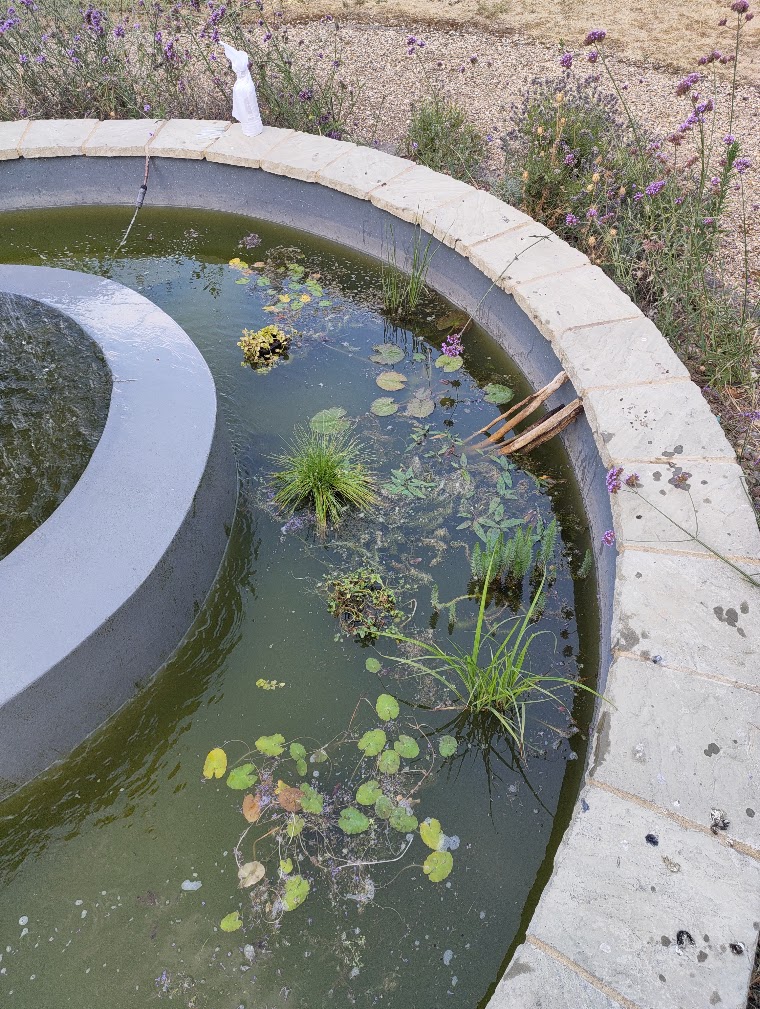
Not much change in general. I don’t think there is an algal bloom in particular, just a layer of biofilm and algae has settled on the bottom. You can see that when I actually take the water sample pictured above the water is relatively clear. The floating hearts (Nymphoides peltata) are still doing alright; I keep removing the decaying leaves to avoid dumping nutrients into the water column, but they keep growing new shoots and pads all the time.
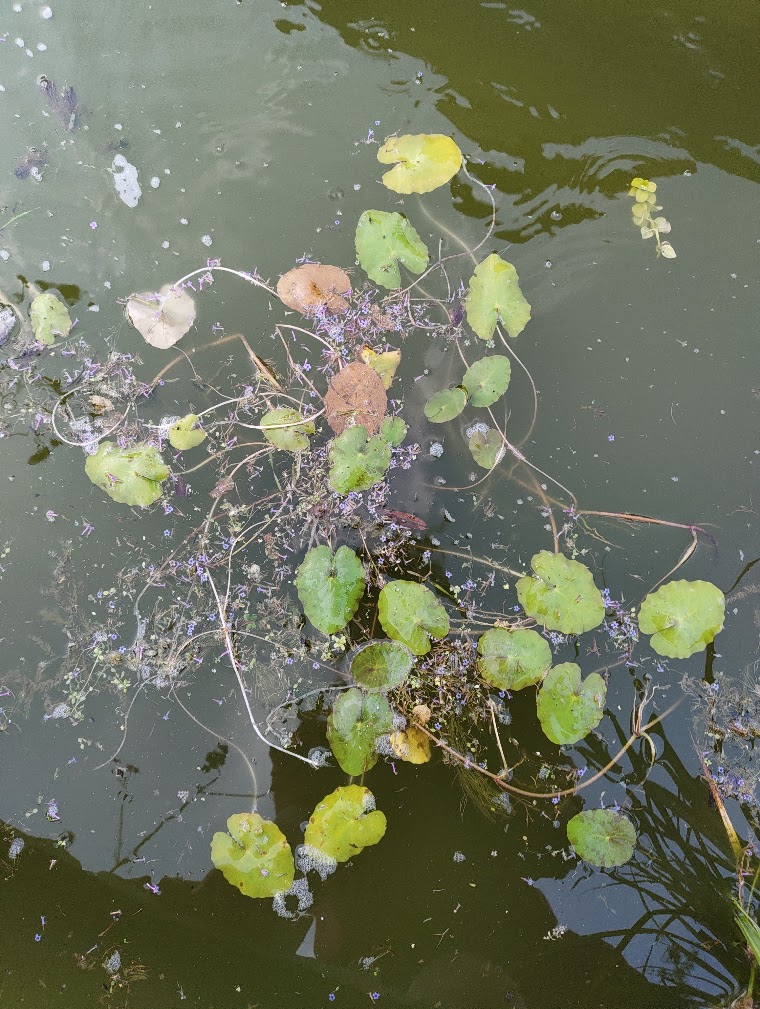
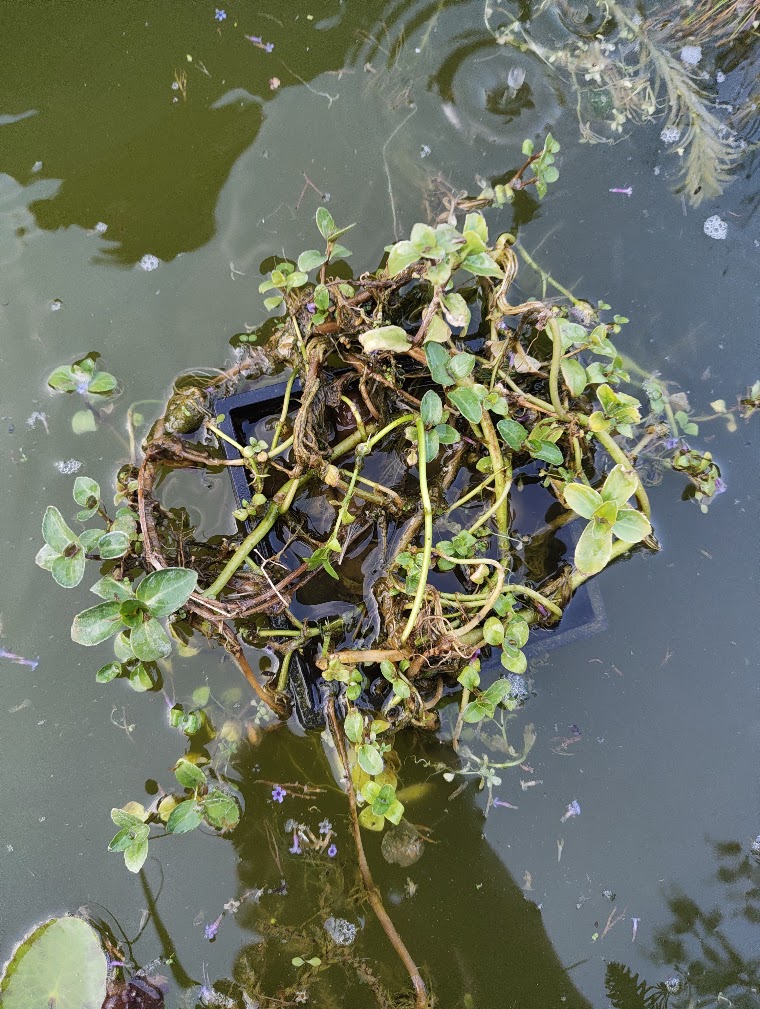
I raised the Veronica beccabunga out of the water a bit according to how it likes to be kept, but unfortunately I think the hot weather has scorched it a bit as it’s got less coverage around its crown. Putting this on a warning watch, but it still has shoots protruding vertically so isn’t struggling too much.
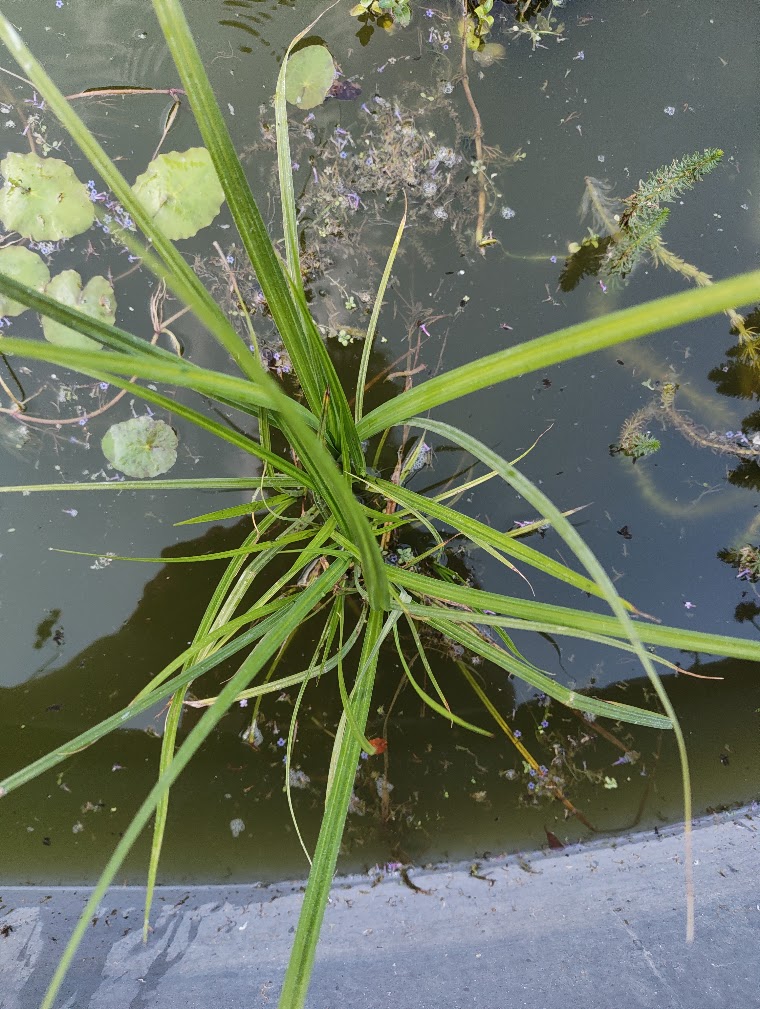
The carex (Carex acutiformis) is looking in very good health. I’ll definitely be buying some more of this as it provides a nice bit of architectural verticality to the pond.
As does the mare’s tail (Hippuris vulgaris), which also looks in excellent health. Might be the winner of the lot at the moment; I think it’s quadrupled in size since planting.
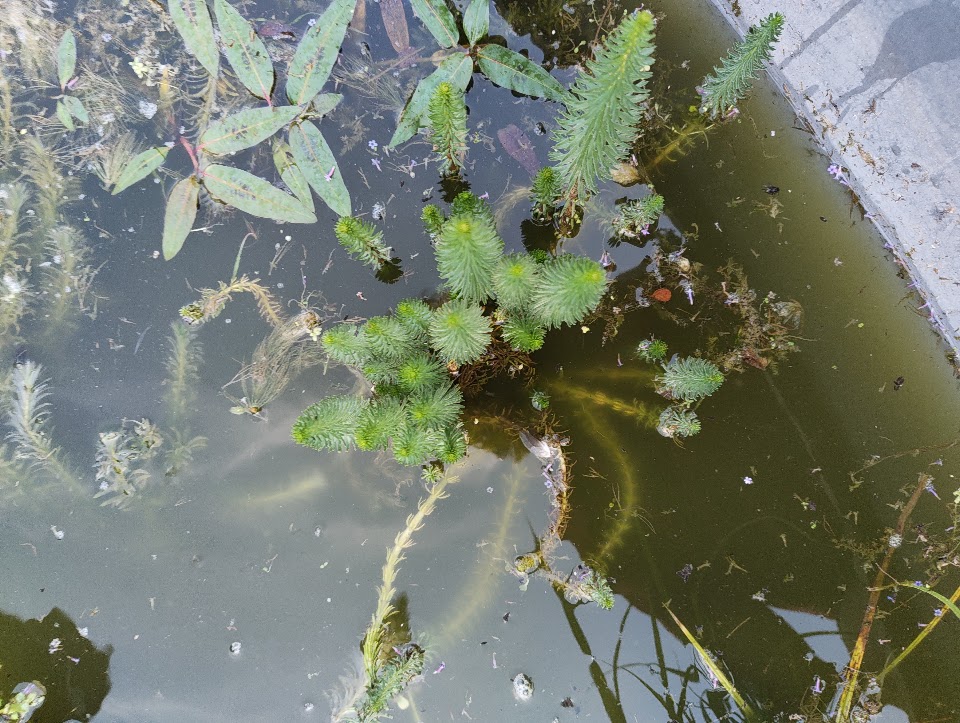
The water knotweed (Persicaria amphibia) is also looking good, making it another candidate for the next batch of plants.
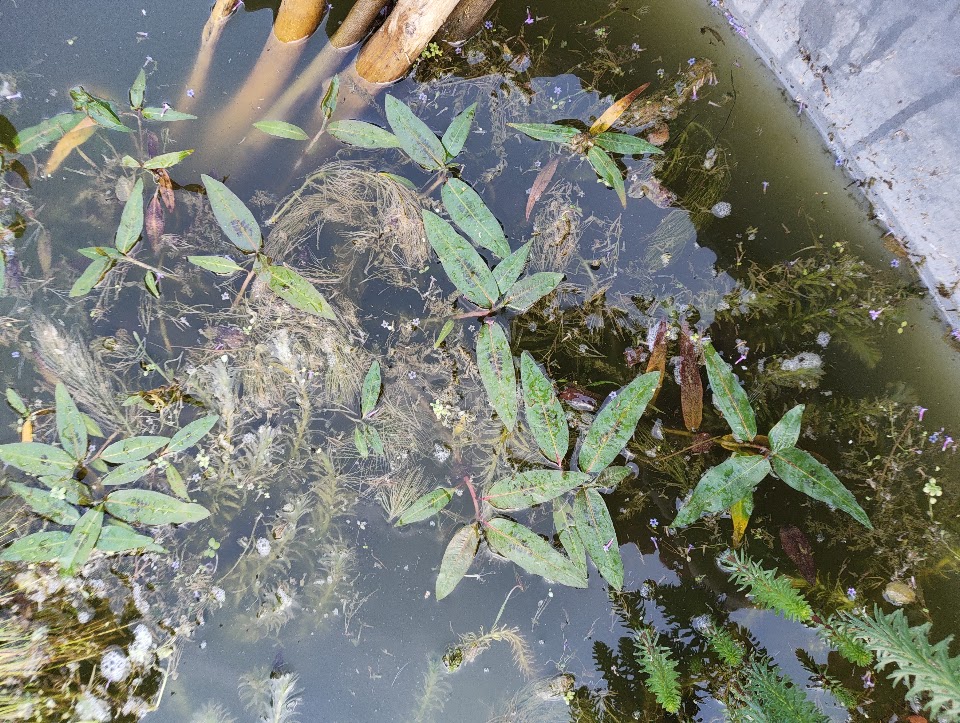
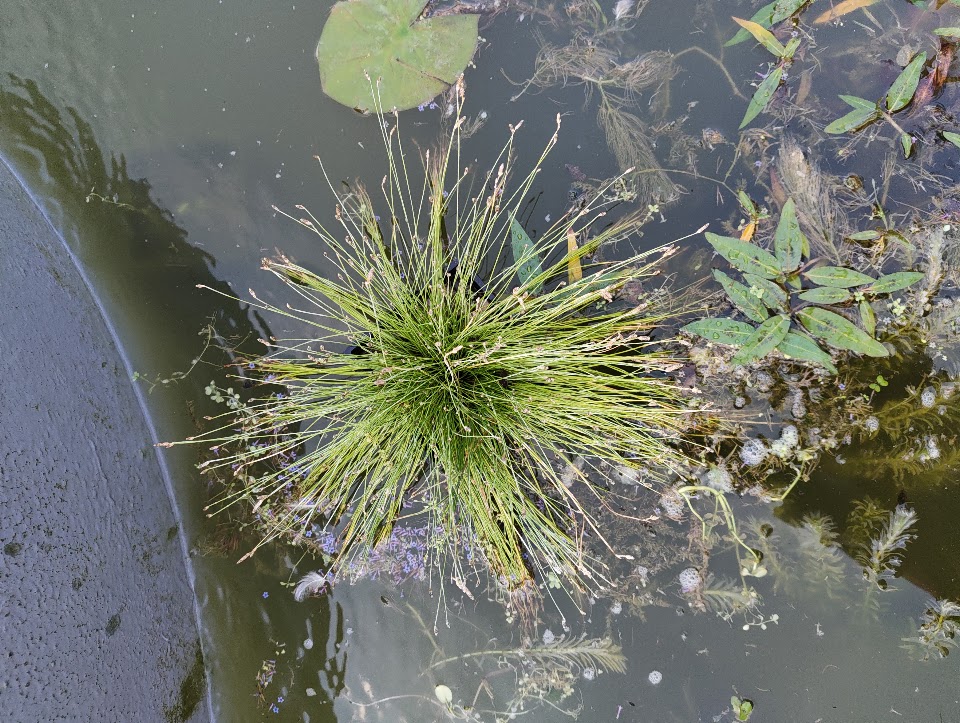
As does the fibre optic (Scirpus cernuus), perhaps another winner of the lot. I will definitely be ordering more of this.
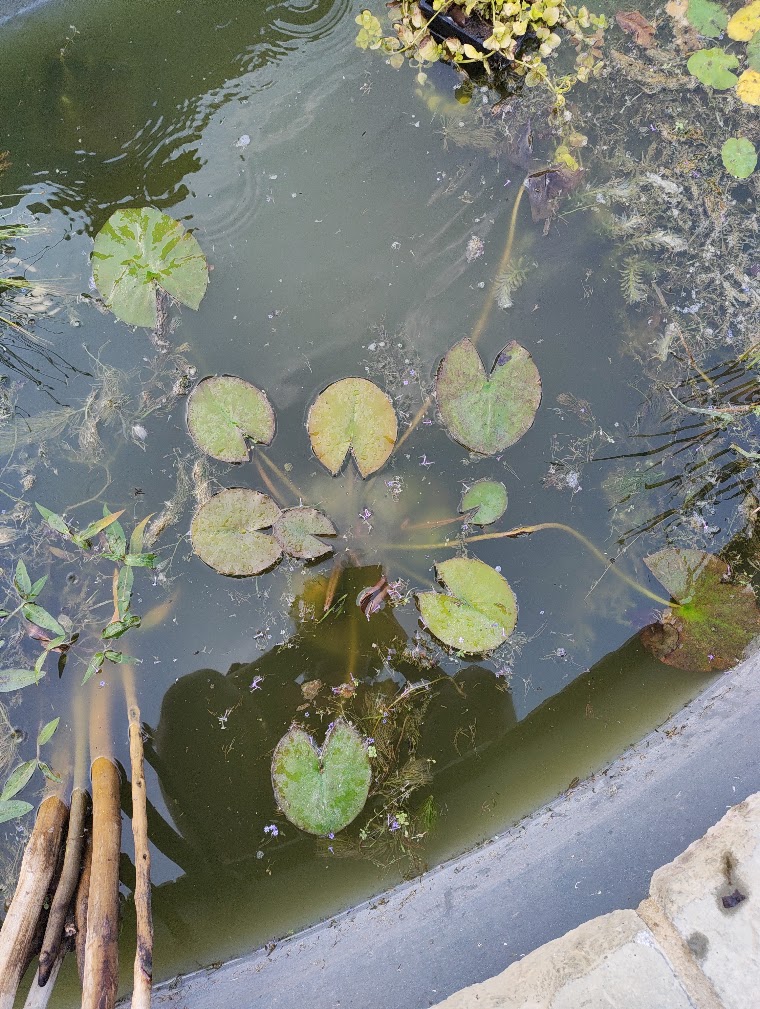
The alba lily (Nymphaea alba) seems to be in a bit of a state of flux right now, placing it on my health watch list. It has very long stems for a few of its pads that seem to be dying out, so I keep removing any rotting ones to avoid overdosing the pond on ammonia and its derivatives. It is still sending up many new shoots though, and I will be ordering more as the shade they provide is paramount in preventing algal blooms.
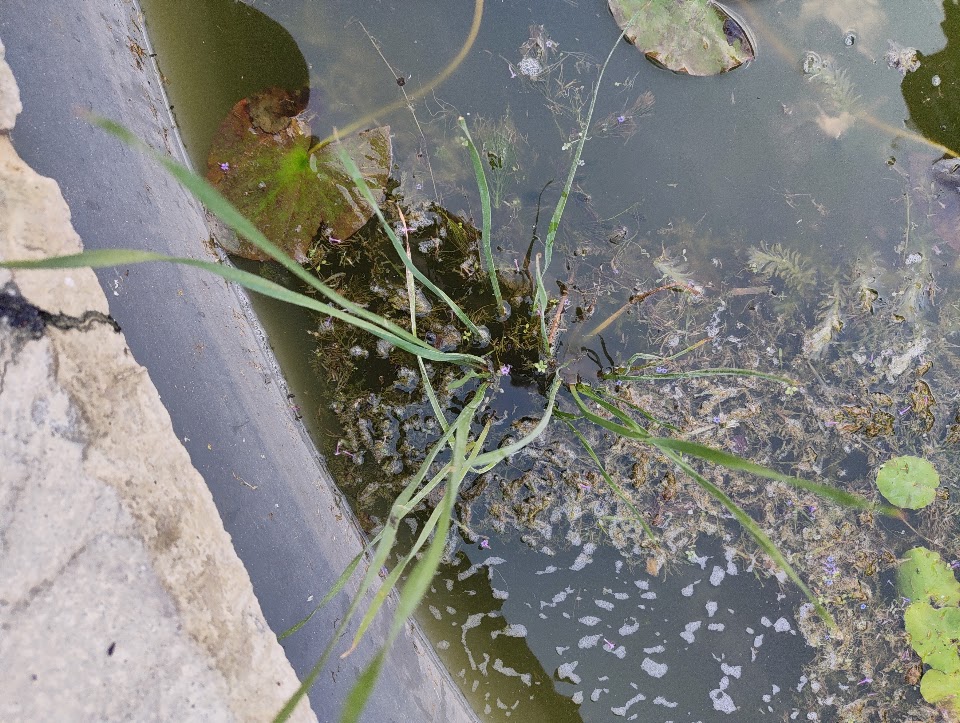
The flowering rush (Butomus umbellatus) is doing alright, not as strong as the carex, but I read that it takes a bit longer for it to bed in and as such it may not flower in its first year. Plant looks symptomatic of focusing its energy reserves on building a decent root foundation.
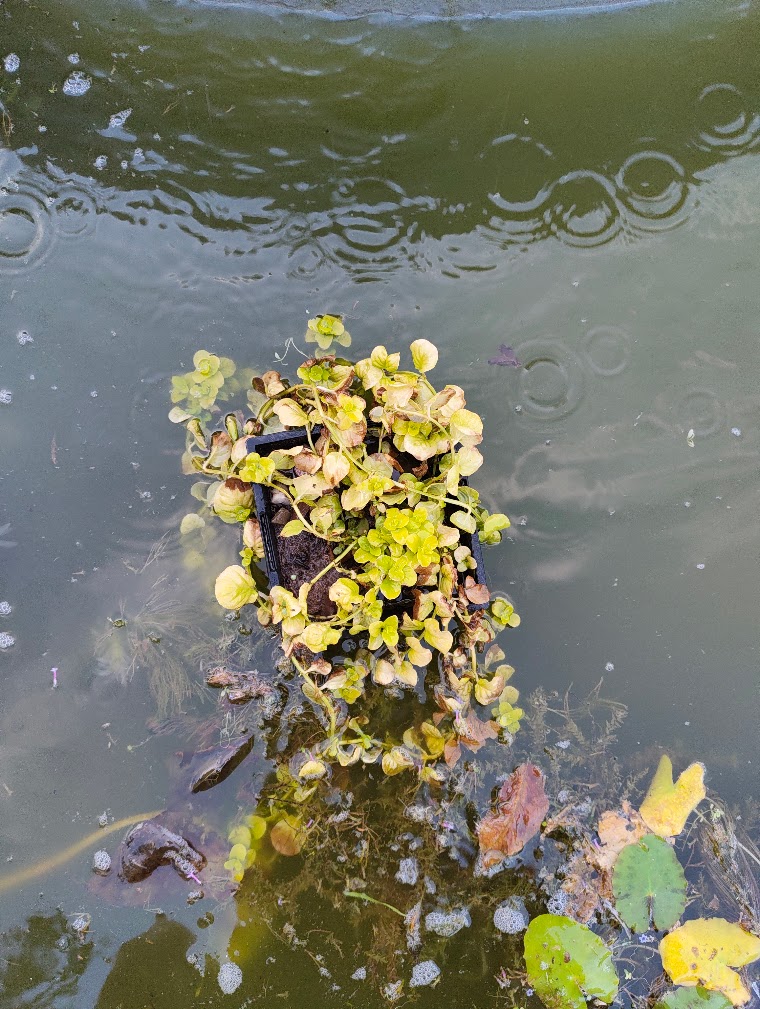
The creeping jenny (Lysimachia nummularia ‘Aurea’) is also doing just alright, with some browning of the leaves attributable to scorching. This plant has much less chlorophyll in its leaves, which is what makes it gold but also diminishes its capacity to dissipate excess light, leading to these burn patterns. Hopefully the cooling weather will help mitigate some of this. I’m slightly suspicious that this plant is too deep currently so I may raise it up to one of the fountain ledges.
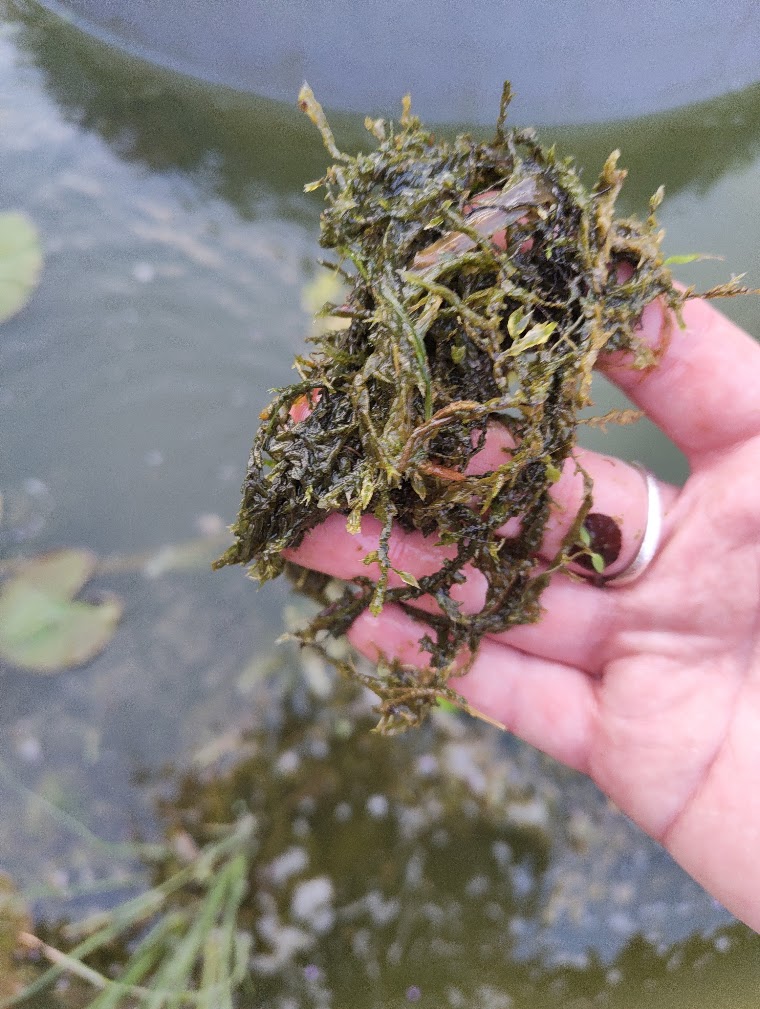
Finally we have some oxygenators that are struggling a bit but still producing new shoots. Ideally it would be a more vibrant green colour than this rather than the darker green we see, which may be algae coating its leaves or perhaps the high pH interfering with its capacity to photosynthesise. This is called biogenic decalcification and happens when submerged plants are stripping bicarbonate for photosynthesis, precipitating calcium carbonate directly onto their leaf surfaces and thus further impacting their ability to photosynthesise. Or it could be the high phosphate levels feeding the algae and biofilms preferentially over the oxygenators. In either case, the best way forward is to do a bulk order of more oxygenators. This will hopefully have the effect of outcompeting the algae for phosphate, thus reducing the phosphate levels whilst resisting the effects of high pH. Species such as hornwort (Ceratophyllum demersum), curled pondweed (Potamogeton crispus), spiked water-milfoil (Myriophyllum spicatum) and the stoneworts (Chara, Nitella) will succeed better at this as they are efficient bicarbonate enjoyers. This also means I can remove the decaying oxygenators over time and thus remove excess phosphate from the ecosystem bound up in the old plant matter.
So, to conclude, here is what I actually ordered:
Oxygenators
- 1 half bag of hornwort, Ceratophyllum demersum — £45
- 3 mare’s tail, Hippuris vulgaris — £15
- 2 fibre optic plant, Scirpus cernuus — £10
Deep water
- 2 un-named water lilies, Nymphaea — £20
- 1 water hawthorn, Aponogeton distachyos — £10
Marginals for the fountain ledges
- 1 white flowering rush, Butomus umbellatus ‘Alba’ — £6
- 1 hard rush, Juncus inflexus — £4.50
- 1 marsh marigold, Caltha palustris — £5
- 2 water forget-me-not, Myosotis scorpioides — £9
- 1 water mint, Mentha aquatica — £4.50
Hardware
- 3 × 22 cm round baskets, 2 × 23 cm square baskets, 11 × 11 cm square baskets — £17.20
- aquatic soil and pea gravel to follow, sourced locally
Total £146.20, delivered free.
Not restocking
- water starwort, Callitriche — struggling, and a poor bicarbonate user at this pH
- willow moss, Fontinalis antipyretica — same problem
- common water crowfoot, Ranunculus aquatilis — same problem
- Egeria / Elodea — same problem, and non-native
On the maybe list for next time
- hair grass, Eleocharis acicularis
- water spearmint, Mentha cervina — less vigorous than the native water mint, but not native
- dwarf lilies, Nymphaea ‘Pygmaea Rubra’ or ‘Laydekeri Lilacea’ — the right size for the ring, but £26–35 each