water, plants, wildlife
Critters galore
So we have critters to report and a water update. Critters first then chemistry second.
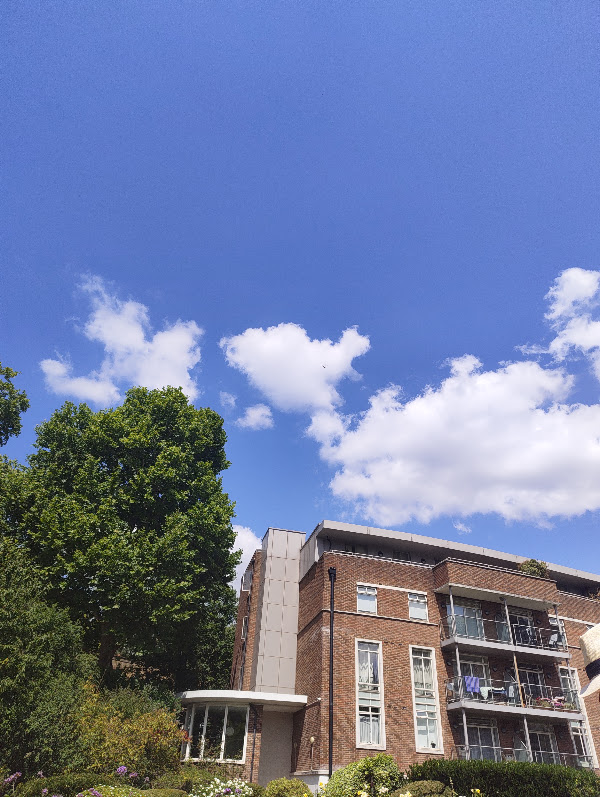
I was super pleased to spot a legit dragonfly zipping around above the pond. I was even more pleased that I managed to catch its silhouette from a distance on my phone camera.
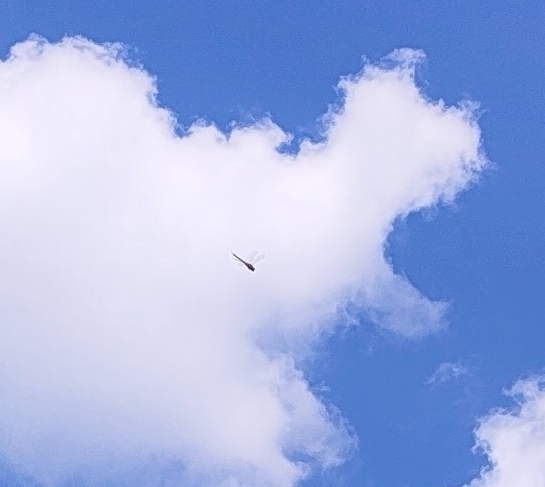
This is super good news from an ecological balance perspective, as well as just a general curiosity. I love these prehistoric looking creatures and marvel at the fact that their giant relatives, the griffinflies, grew up to 75cm across around 300 million years ago. Their presence is super encouraging, especially given their role near the top of the pond food chain. As underwater larvae, they are apex invertebrate predators. Interestingly, they will spend most of their life beneath the surface, often a year or two submerged versus only weeks as flying adults. Their unique hinged jaw can shoot out to ambush prey such as mosquito larvae.
Speaking of which, unfortunately I noticed mosquito larvae proliferating in a few quiet corners of the pond foliage. I was under the impression that the fountain stream would disturb the water’s surface enough for them to not survive, but the lily pads are evidently preventing this and allowing them to survive. I have added a suitable dose of BTI. BTI is Bacillus thuringiensis israelensis, a naturally occurring soil bacterium. When mosquito larvae eat it, proteins it produces rupture their gut, but those proteins only activate in the specific gut conditions of certain fly larvae, so it’s harmless to almost everything else: no effect on dragonfly larvae, beetles, snails, birds, mammals or plants. The one caveat is that it isn’t fussy within the flies, so it also hits midge larvae, which are food for other pond life, so I’m using it sparingly rather than routinely. In the long run the dragonfly larvae are the real mosquito control; the BTI is just a stopgap until the predators establish.
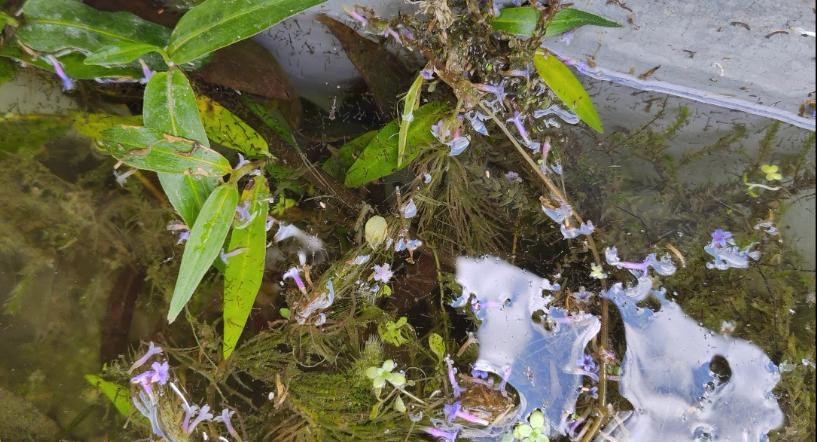
Despite their unwanted presence, they are still quite interesting creatures. Instantly recognisable from their inverted swimming positions where they stick their tail out of the surface to breathe and immediately wriggle down in a frantic manner to escape when the surface is disturbed. I will destroy them all with my bacilli.
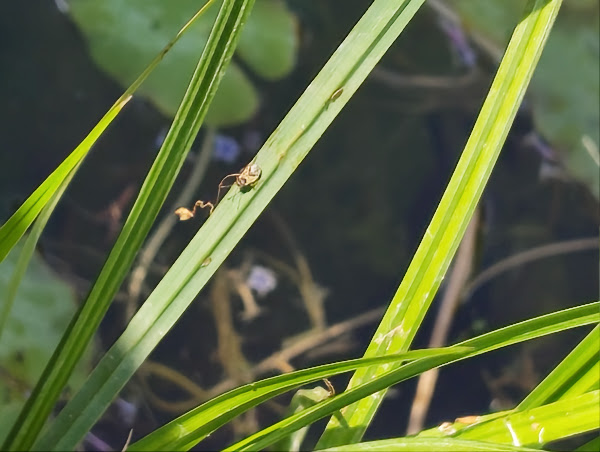
I also spotted what I think is a shield bug on one of the rushes, happily sunning itself in the heat.
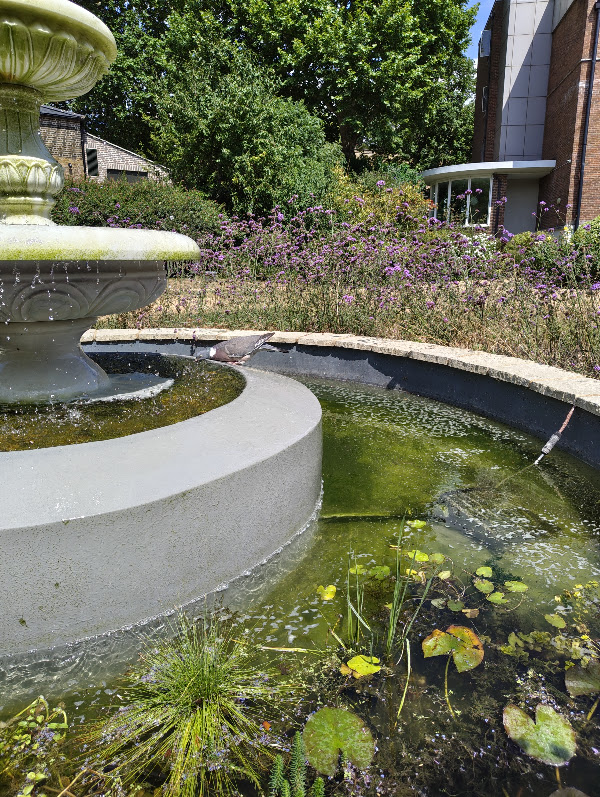
And a bonus pic of a humble pigeon drinking from the central fountain, where you can see the general state of the (greening) pond.
Finally, a bit of chemistry now. We’re seeing the first real movements in nitrite and ammonia.
| 6 Jul | 15 Jul | |
|---|---|---|
| pH | 9 | 9 |
| Ammonia | 0 ppm | 2 ppm |
| Nitrite | 0 ppm | 2 ppm |
| Phosphate | 5 ppm | 5 ppm |
The obvious culprits here are the lost vegetation reported in the previous post. All that organic matter breaking down into ammonia feeds this cycle that should eventually turn into nitrite and then the fertilising nitrate. Nitrite is not good news for aquatic animal life (fish) but is fine in these amounts for a plant and insect pond. Phosphate and pH largely the same.
Finally, a few notes to say that the lily is still absolutely thriving and the beccabunga is sending up strong vertical growth as new shoots. Great stuff to see.