plants, build
Planting out
With the fountain scrubbed, refilled and dechlorinated, and the Legionnaires’ test back negative, it was time for the fun part: plants. But first, one more look at the water.
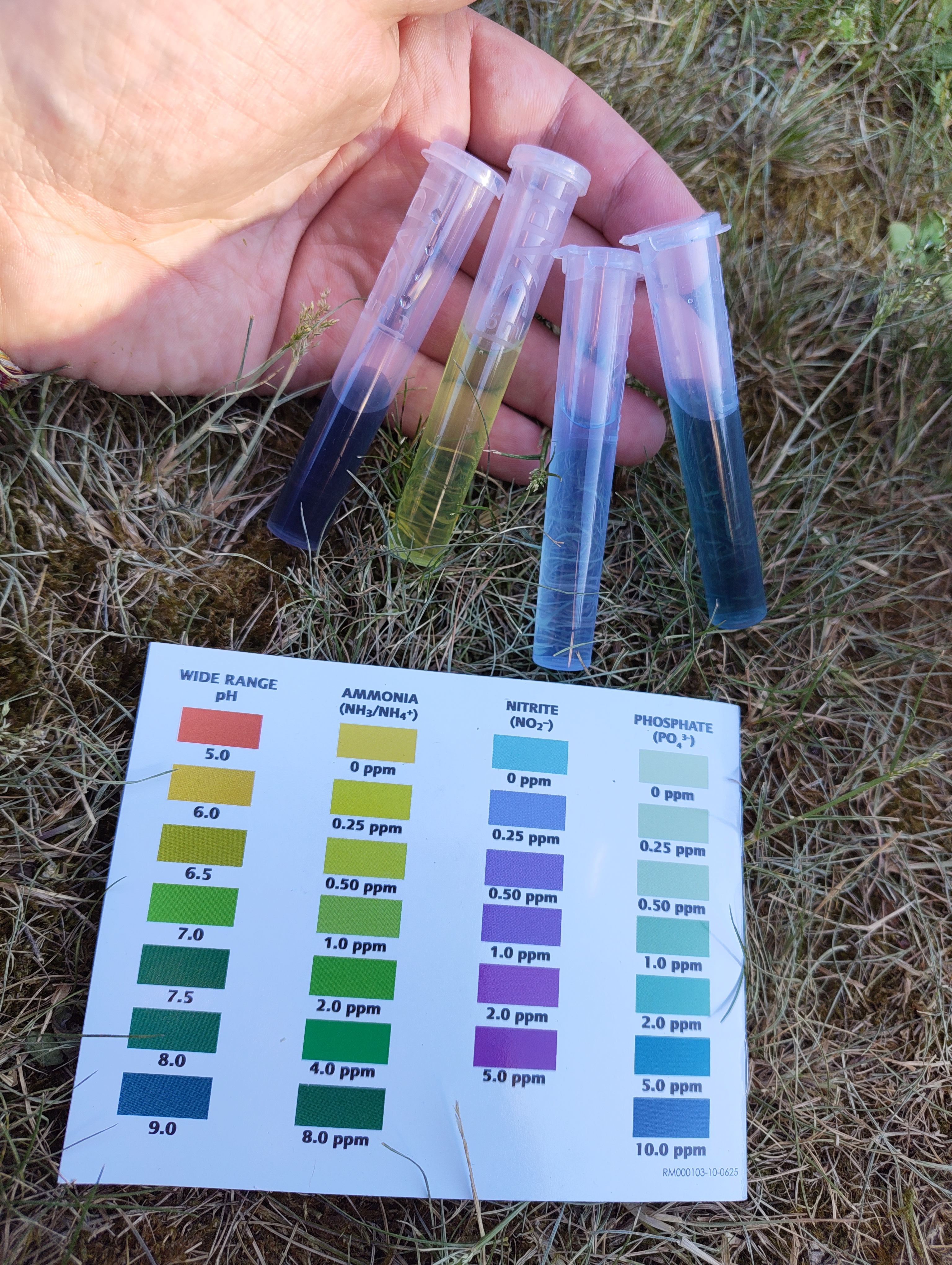
Four days on from the refill, and before anything went in, I tested again.
| reading | |
|---|---|
| pH | 9 |
| Ammonia | 0 ppm |
| Nitrite | 0 ppm |
| Phosphate | 10 ppm |
No real movement from the baseline: still zero ammonia and nitrite, still 10 ppm phosphate, still a stubborn pH of 9. Nothing living in there yet to shift the numbers. Time to change that.
The plants came from Wetland Plants, and I put them in roughly in order of how far underwater they live. First came the oxygenators, which do two jobs at once. They photosynthesise entirely underwater, so they put oxygen straight into the water column rather than into the air above it. They also feed the same way: bathed in water, they absorb dissolved nitrates and phosphates across their whole leaf and stem surface, not just through roots. That is the competition. Anything the plants take up is nutrient the single-celled algae does not get, and starving the algae out is the strategy here. They do respire in the dark like everything else, so they give oxygen back by day and take it away by night.
The first oxygenator was hornwort (Ceratophyllum demersum).
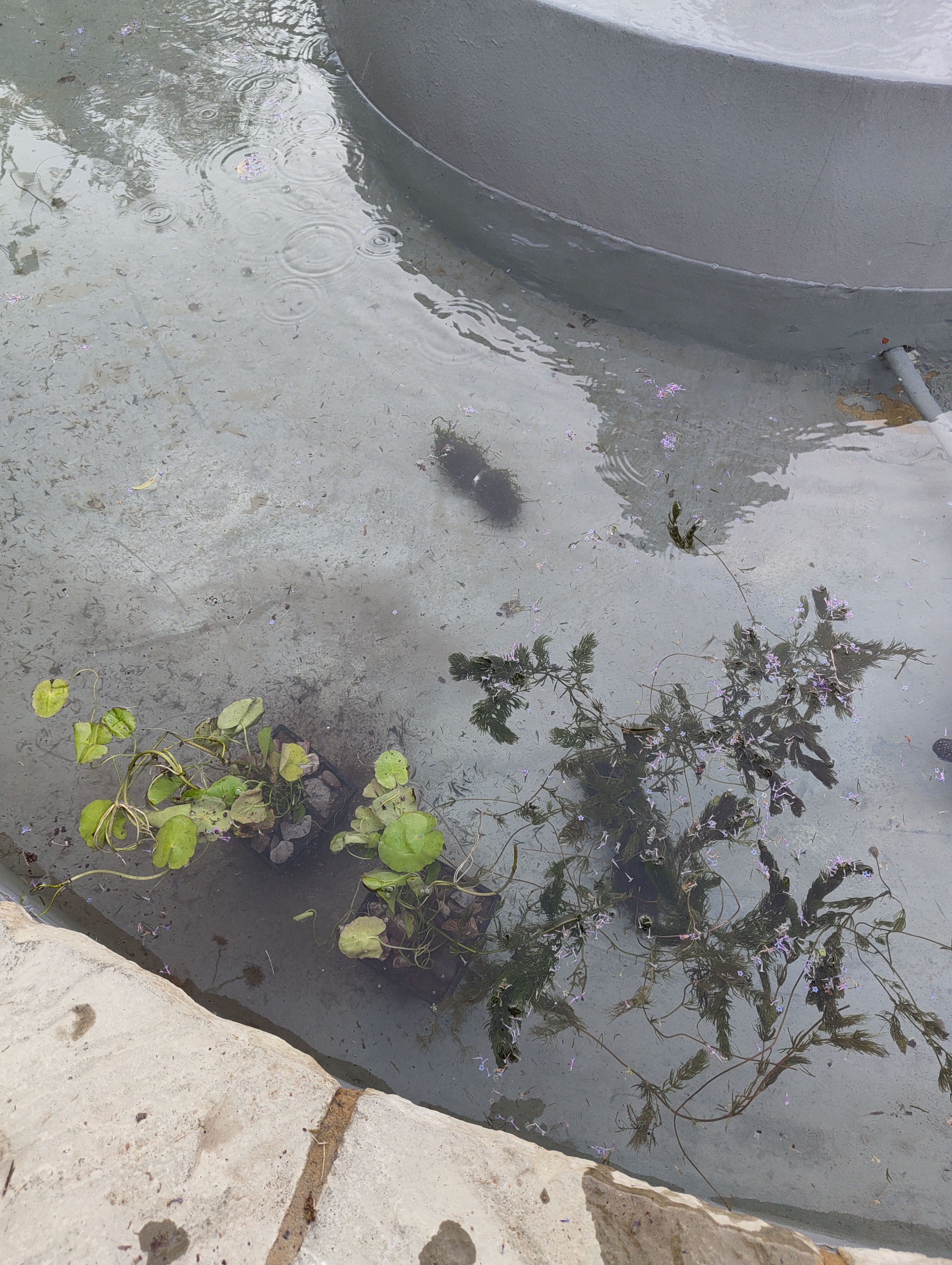
Then I threw in the interesting specimen of water soldier (Stratiotes aloides), which will bob down in the winter and emerge to the surface in the summer to flower. It is a member of the frogbit family, Hydrocharitaceae. It is a calciphile, and gradually gets encrusted with lime; as growth slows in autumn that ballast takes it down to overwinter on the bottom, out of reach of the frost. In spring the fresh growth is lighter than water and it rises again. When free-floating its roots can trail a metre down, which is what keeps it sitting upright.
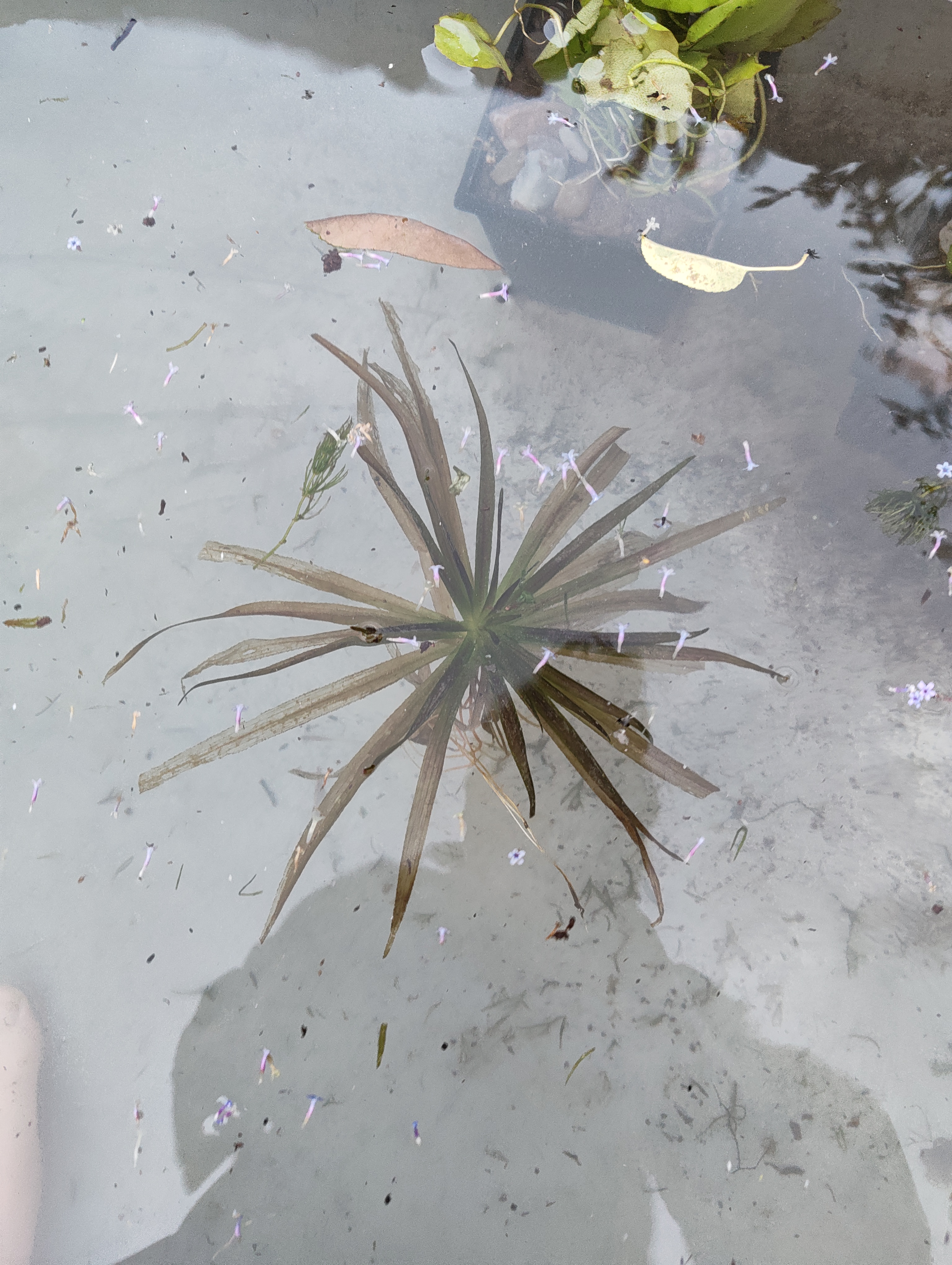
Then I started planting the deep water plants. Starting with the alba lily (Nymphaea alba), I weigh down the mesh baskets with river stones (it’s important to get the right type of stone so that it doesn’t leach lime into the water, thereby increasing the pH to toxic levels).
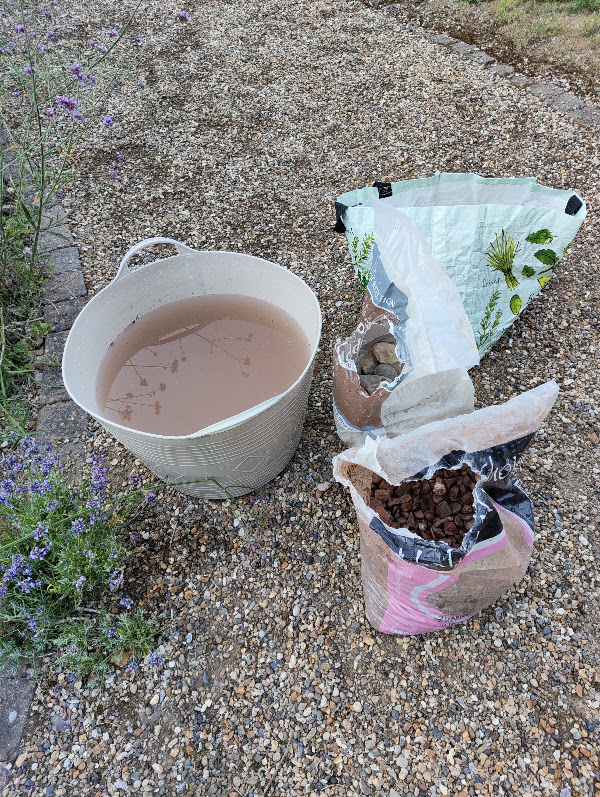
I then fill the basket with specialised pond compost, which has a silty quality that won’t overburden the water with nutrients, then I weight the planted basket down with some fine gravel.
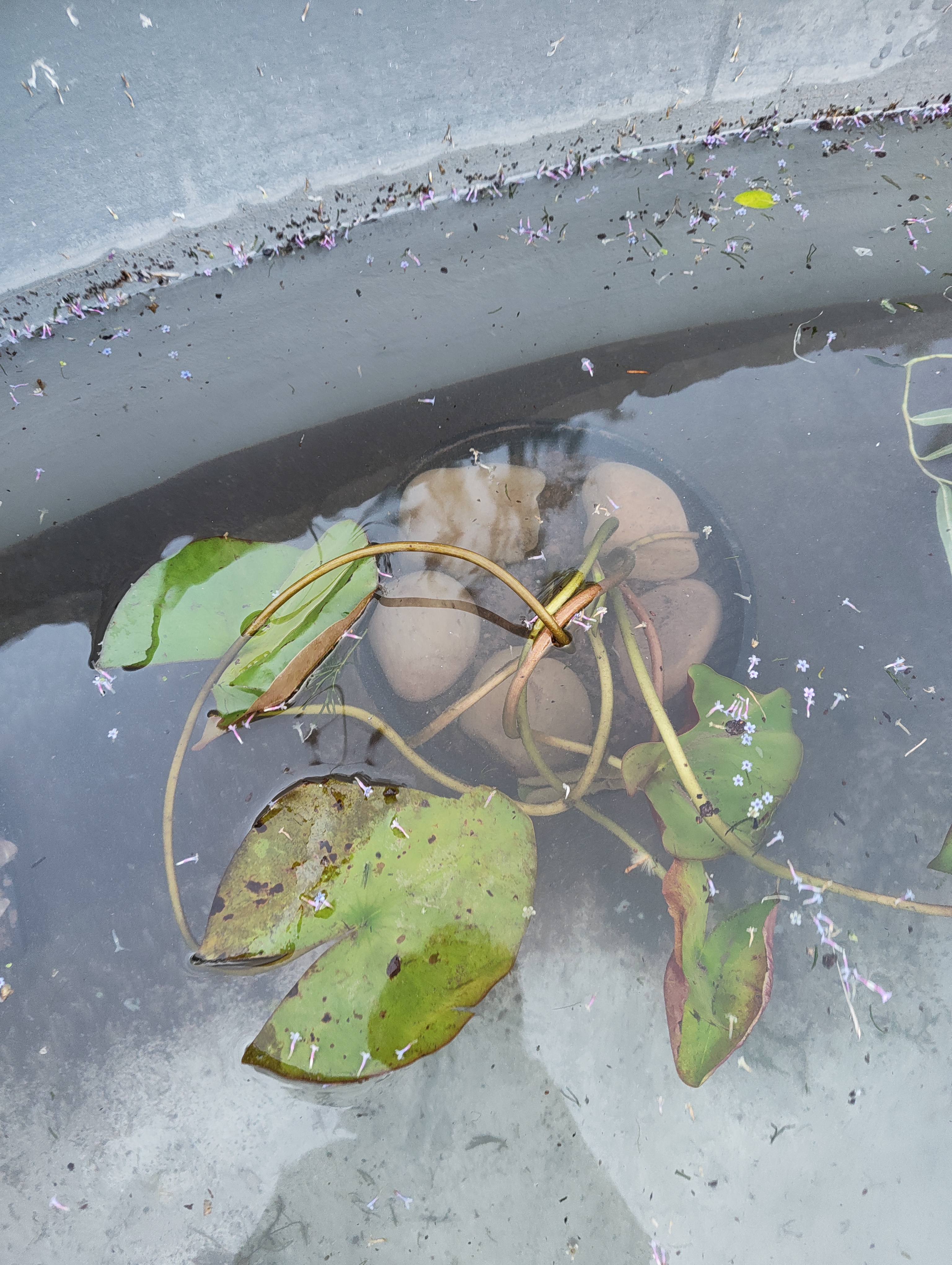
Then I proceeded with the floating heart (Nymphoides peltata), which has a curious ability to float freely or be anchored in the soil. I went for the latter, but it was difficult to establish where the root system versus the plant actually was.
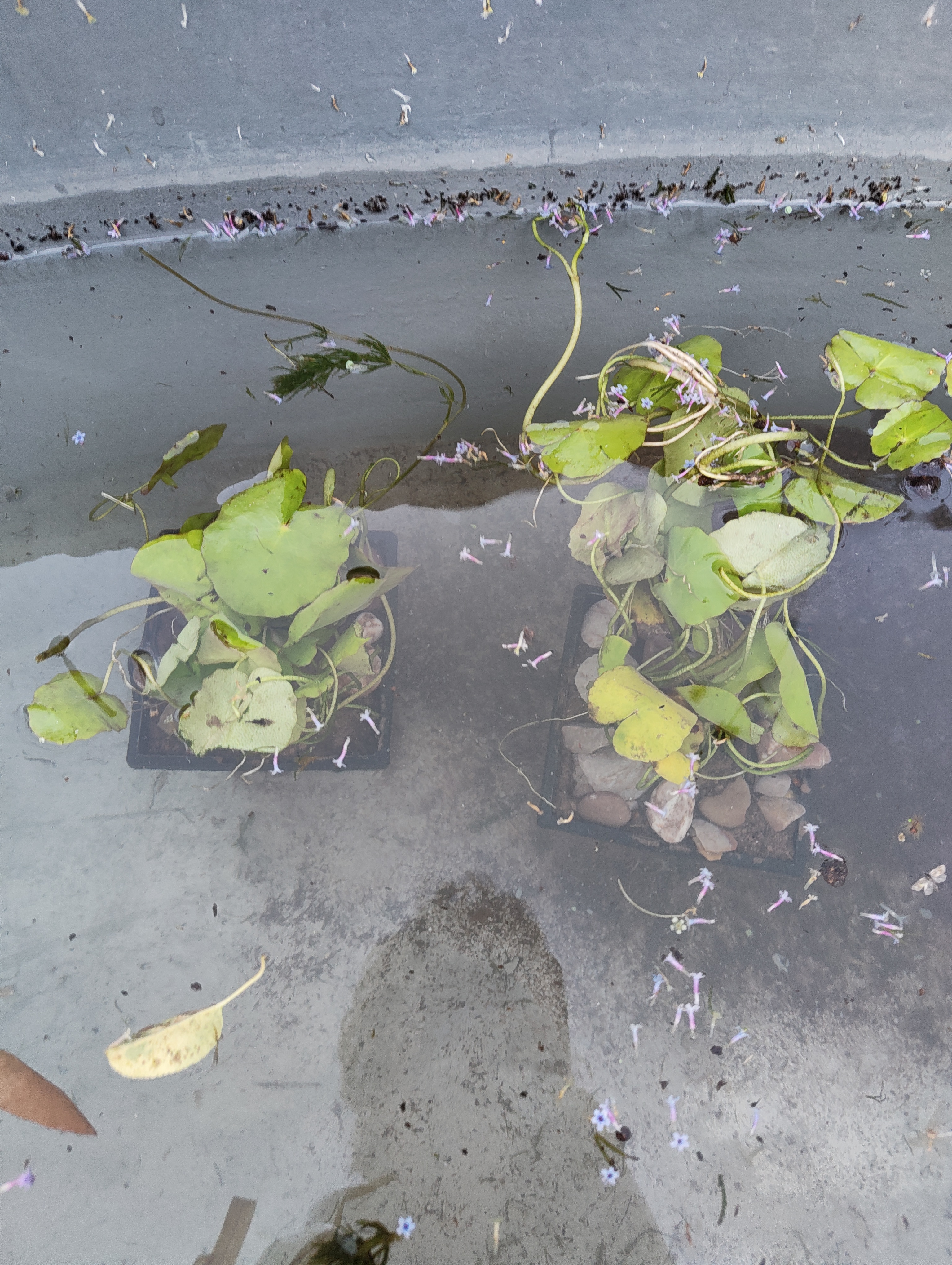
Next was the willow grass (Persicaria amphibia), which when fully established should send up pretty pink flower stems above the surface of the water.
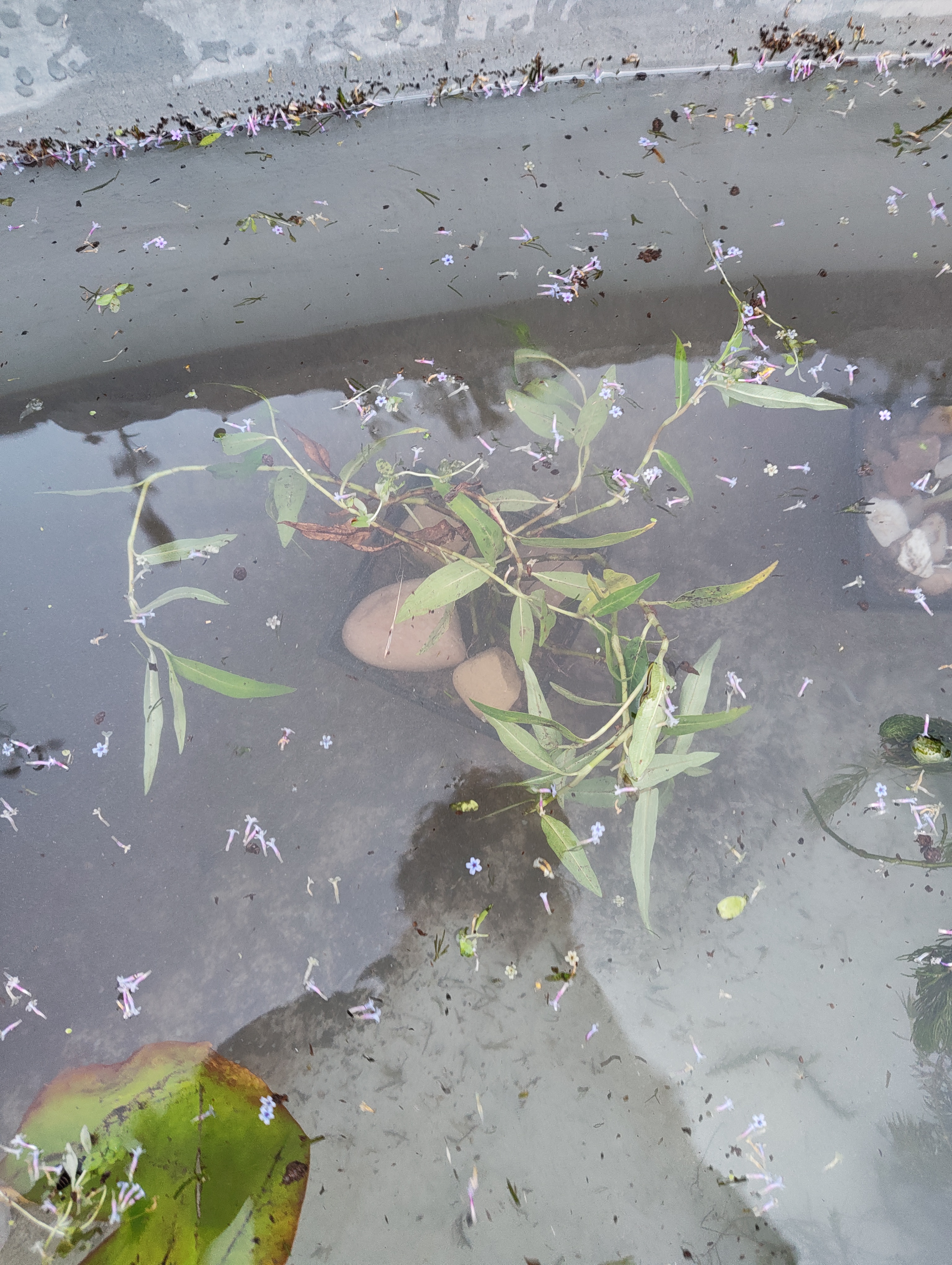
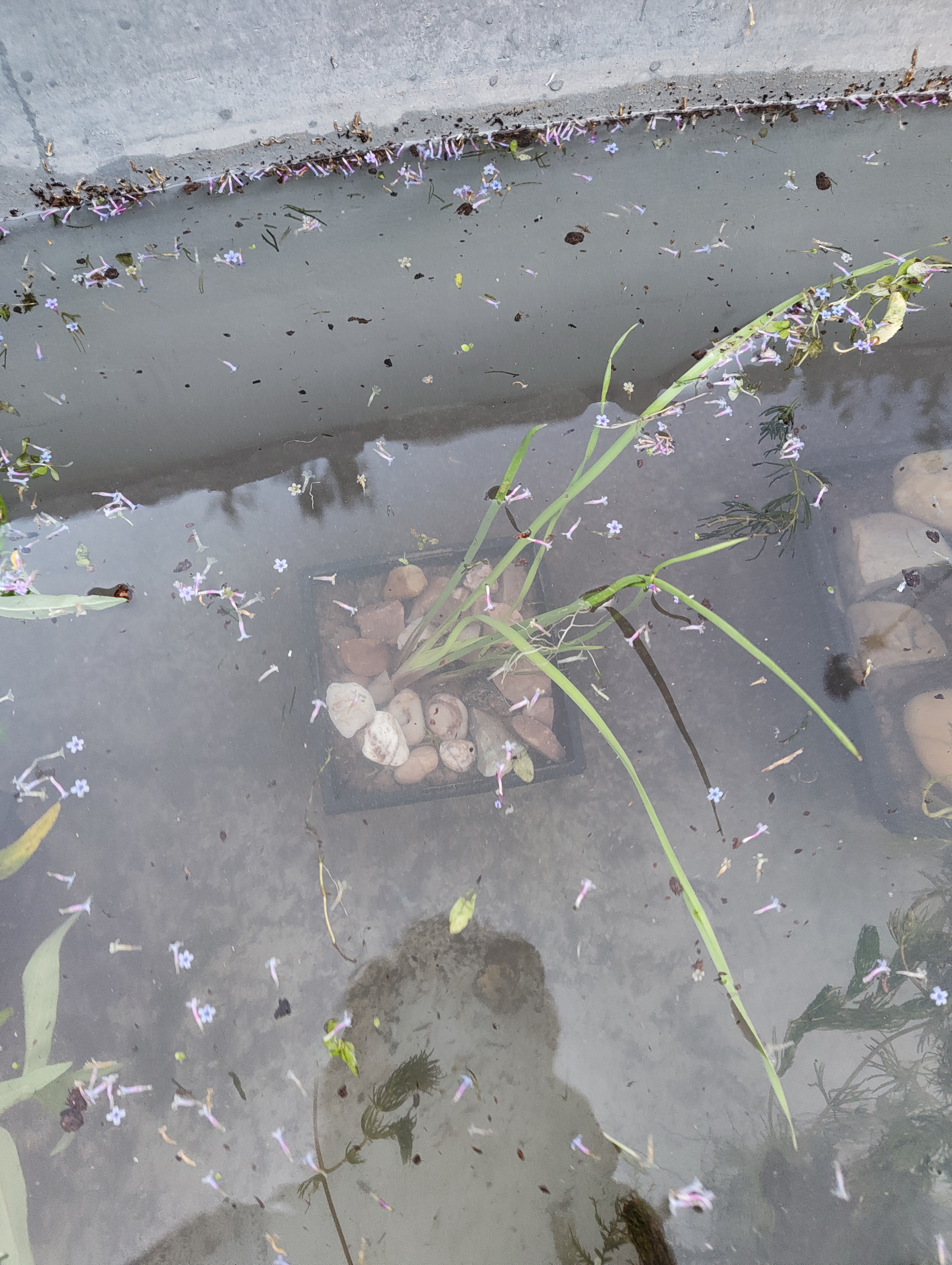
The flowering rush (Butomus umbellatus) is another grassy marginal that will eventually blossom into clusters of delicate white and pink petaled flowers.
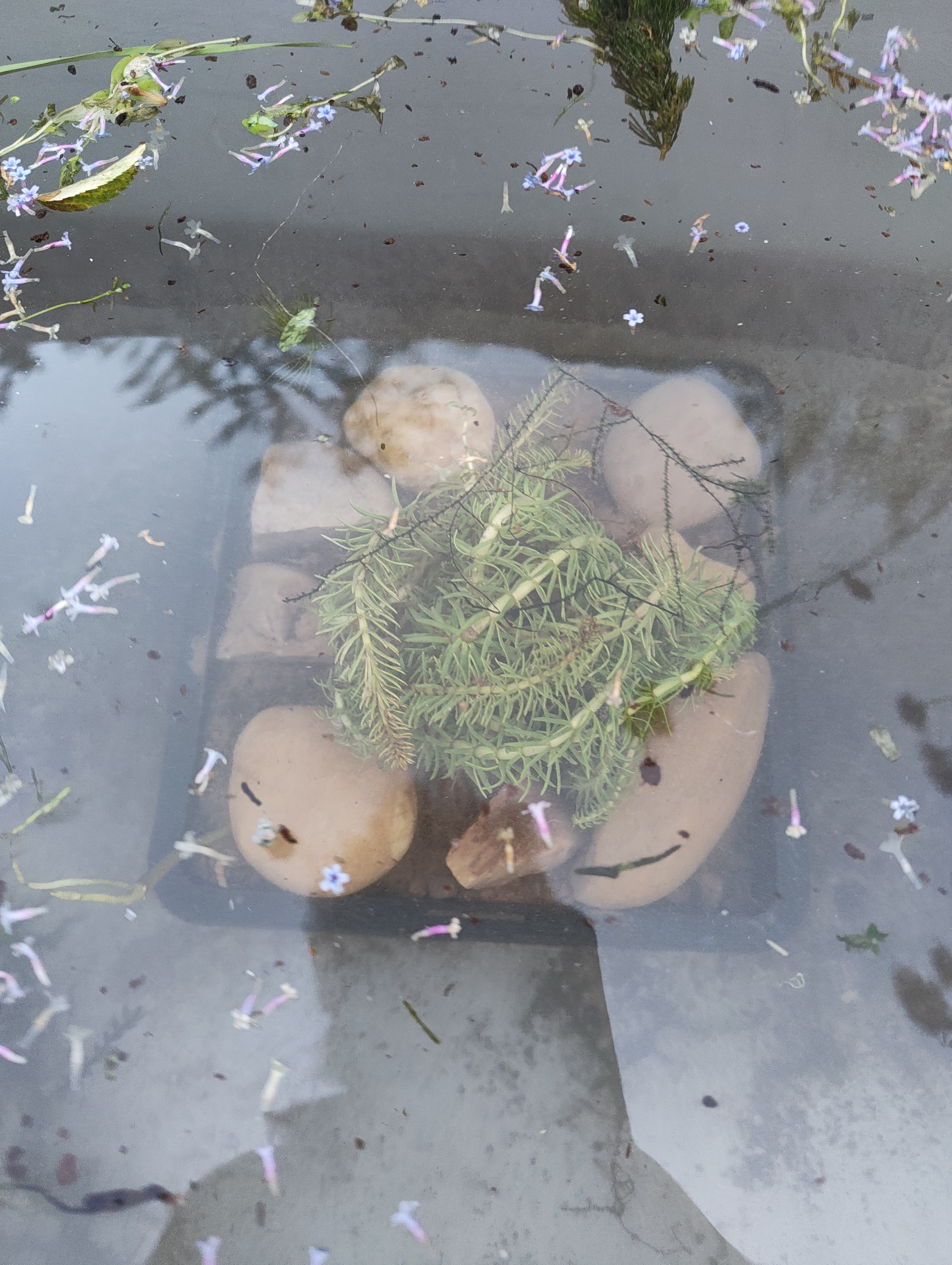
Mare’s tail (Hippuris vulgaris) is an interesting prehistoric looking plant that carries some warnings about how quickly it can spread, being a somewhat (native but) invasive species. Should be noted this species is different from the field horsetail (Equisetum arvense), which is a notoriously deep rhizomed land weed.
Water starwort (Callitriche sp.) is another tricky to plant specimen with no clear root structure, could be sunk in as a freely floating oxygenator but I decided to anchor it in a small pot.
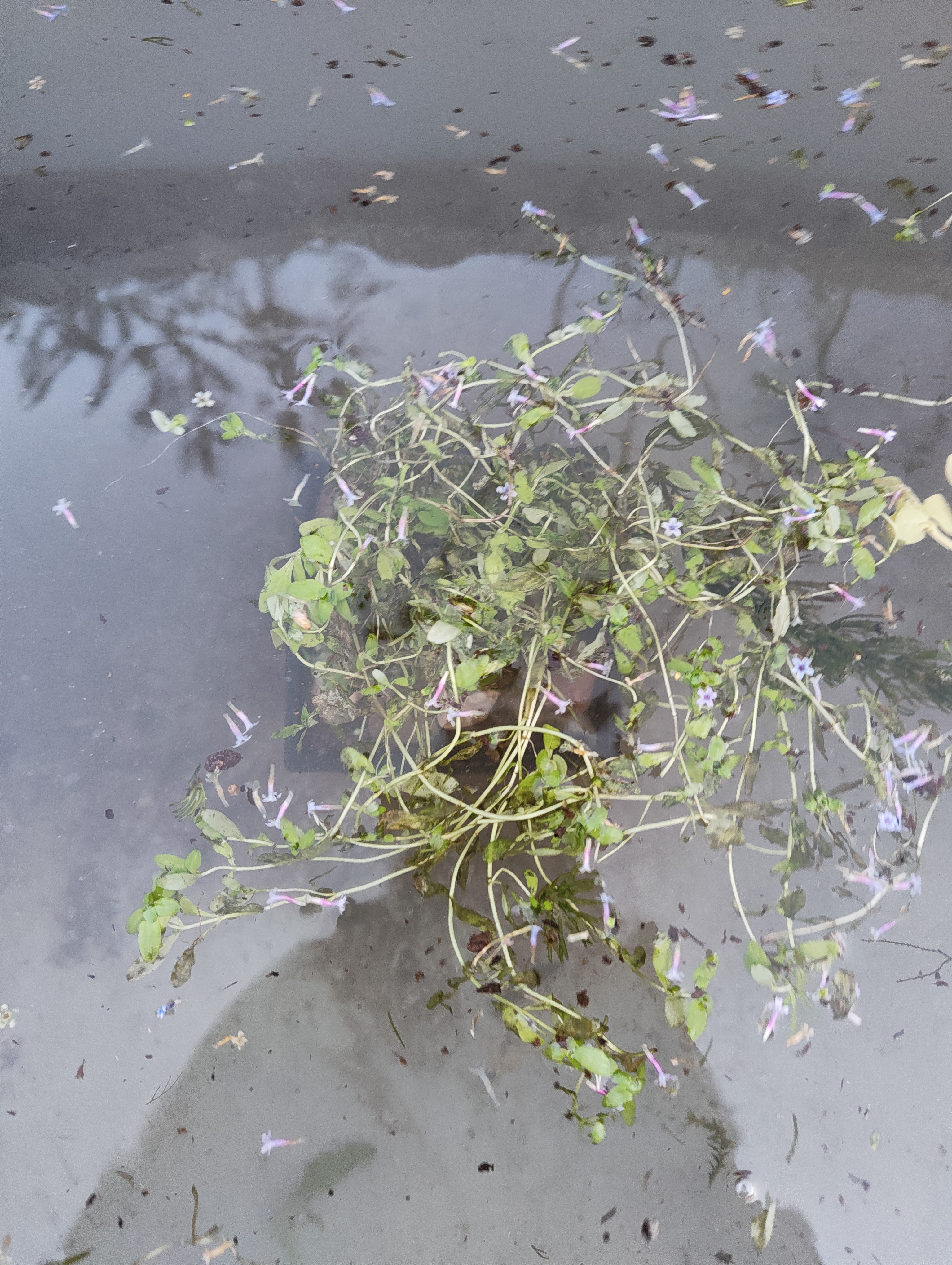
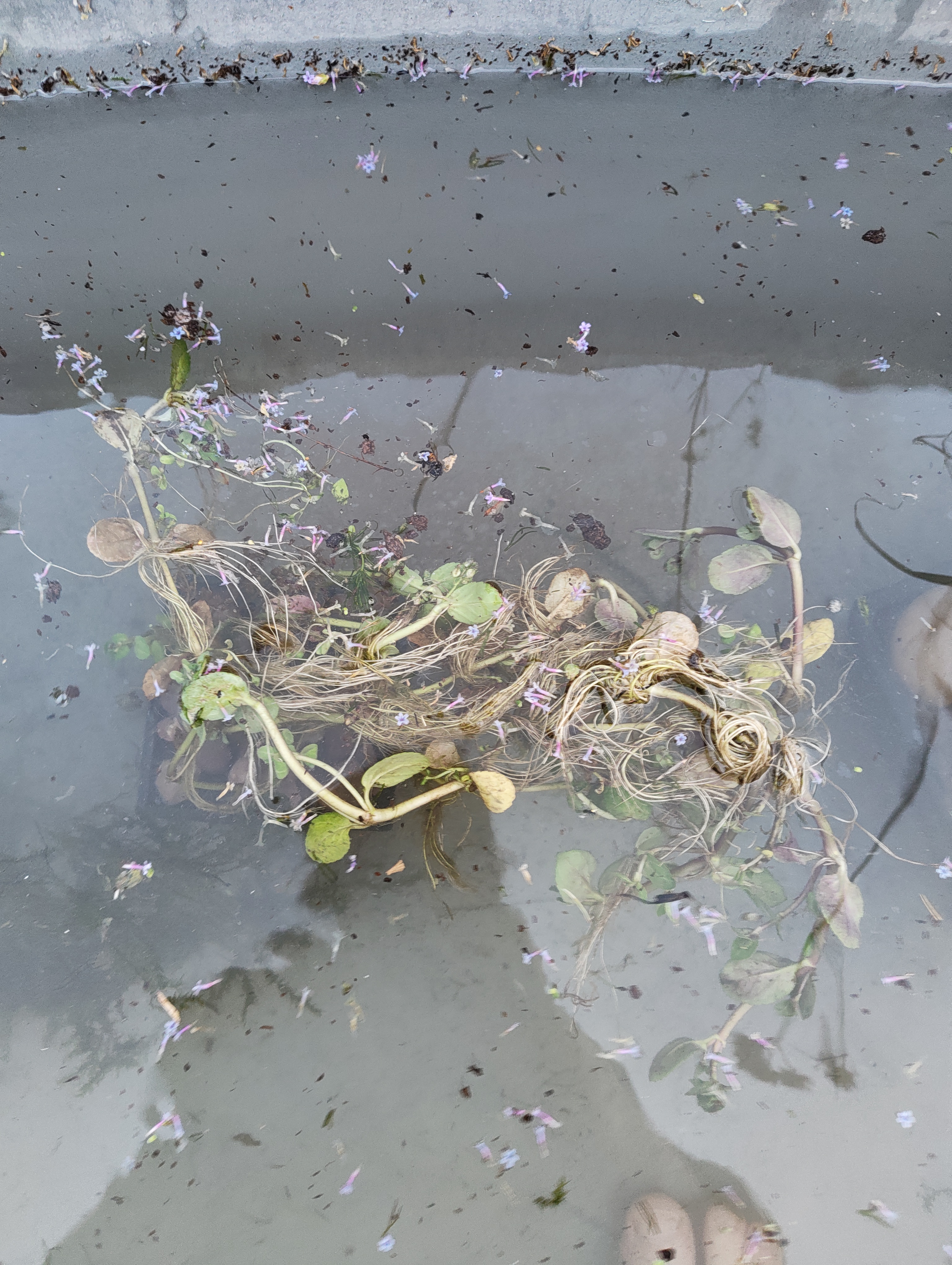
Brooklime (Veronica beccabunga) has my favourite name but looks the messiest upon planting, couldn’t quite see where the rhizomes end and the foliage begins.
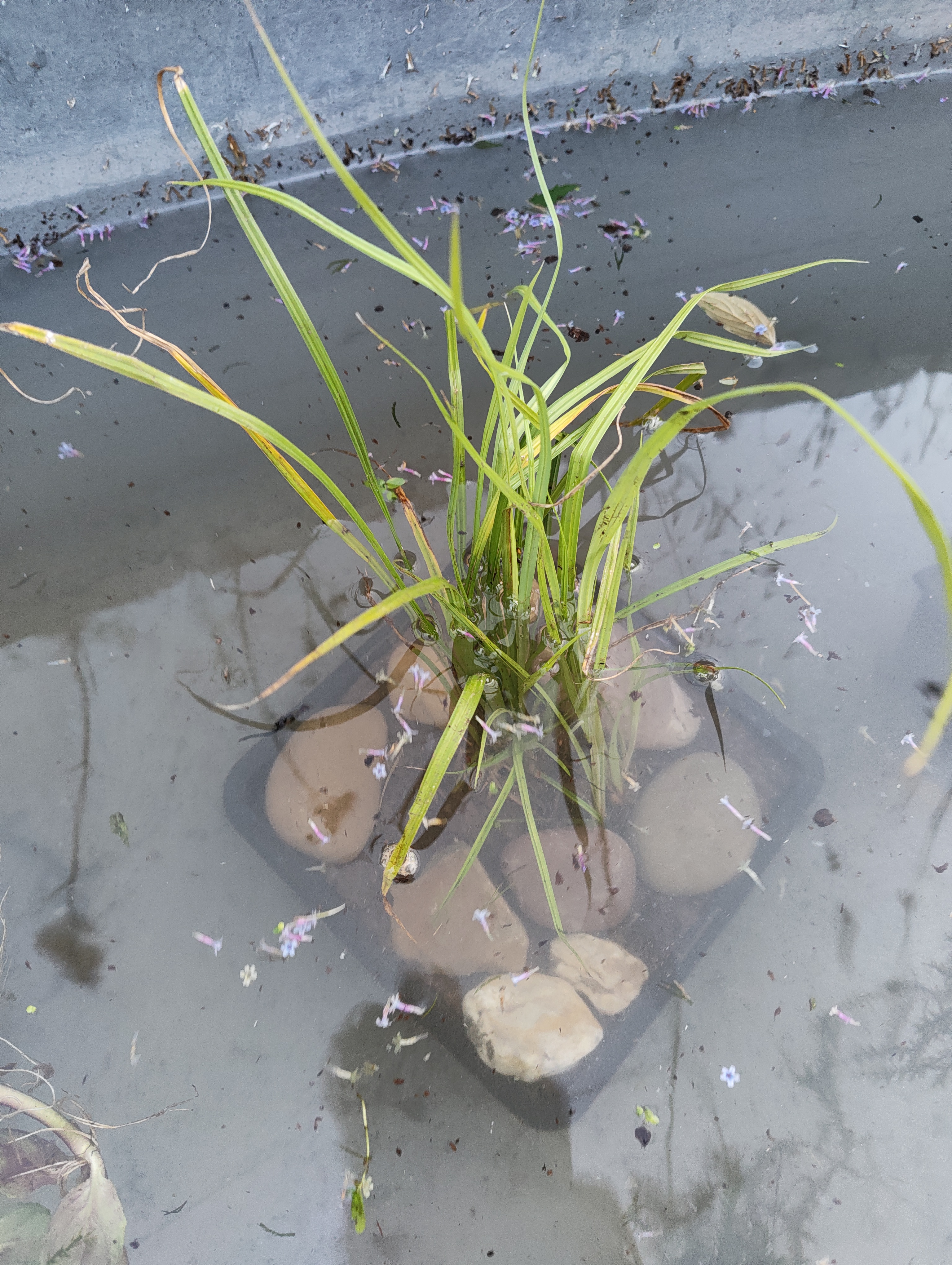
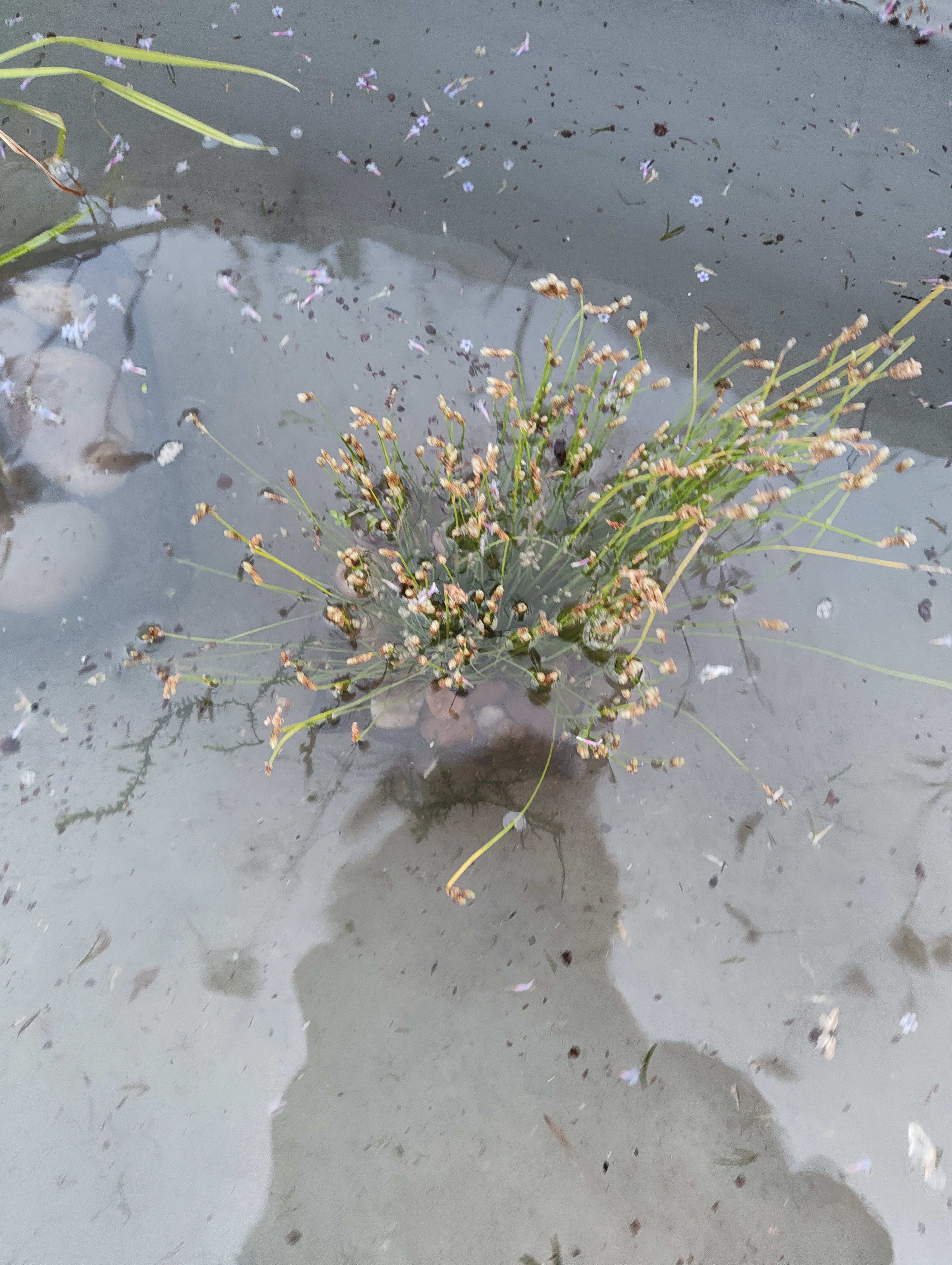
Finally, I added two grasses, lesser pond sedge (Carex acutiformis) and the fun named fibre optic plant (Scirpus cernuus).
I also planted a creeping jenny (Lysimachia nummularia ‘Aurea’).
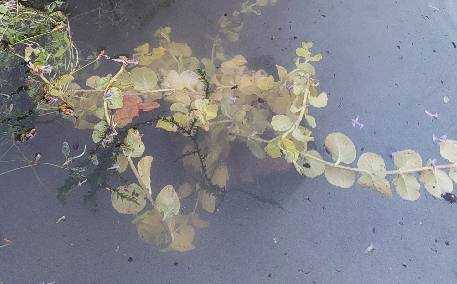
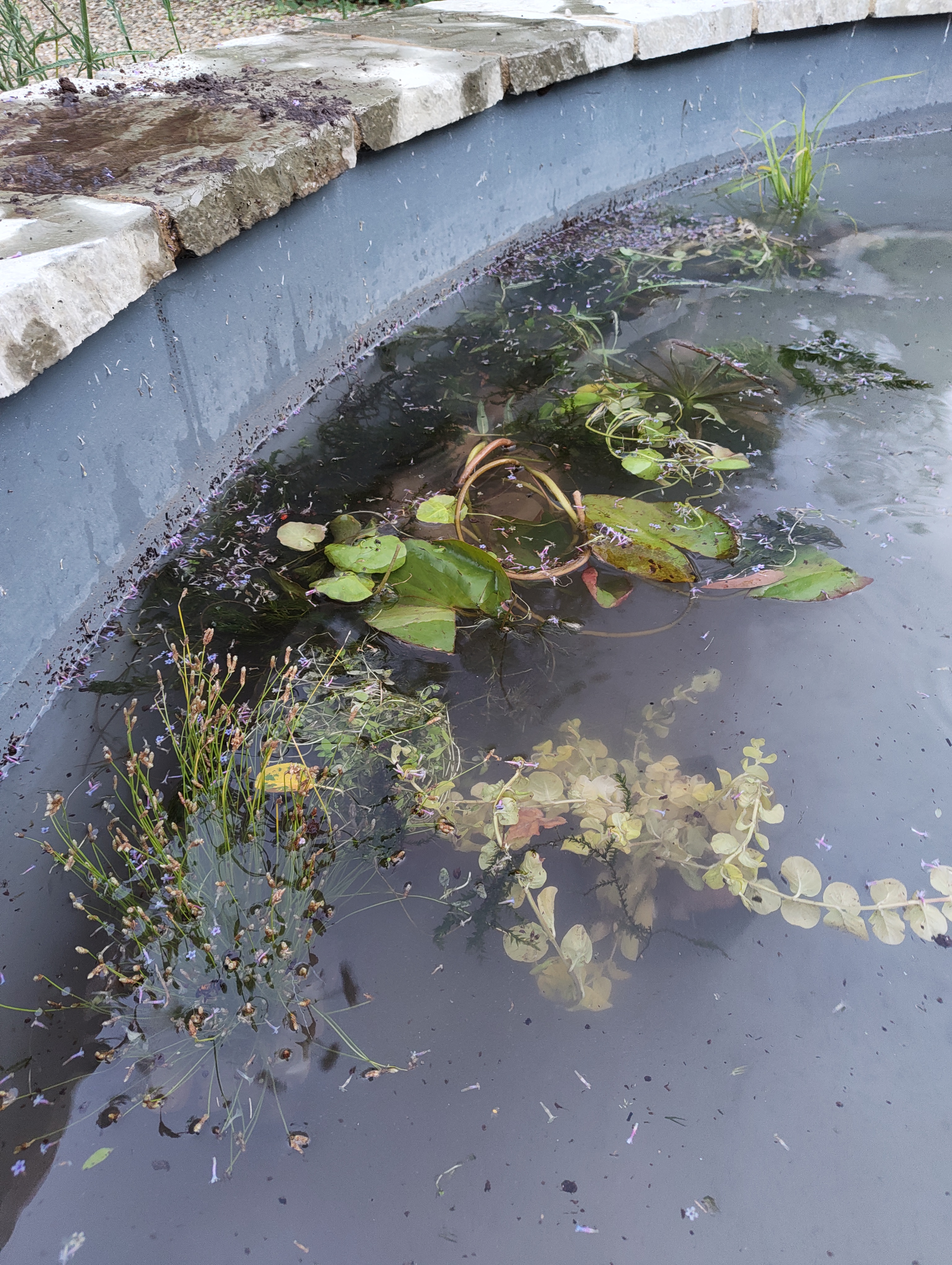
Here is what everything looks like together, creeping jenny is the yellow plant. Now to wait and see.